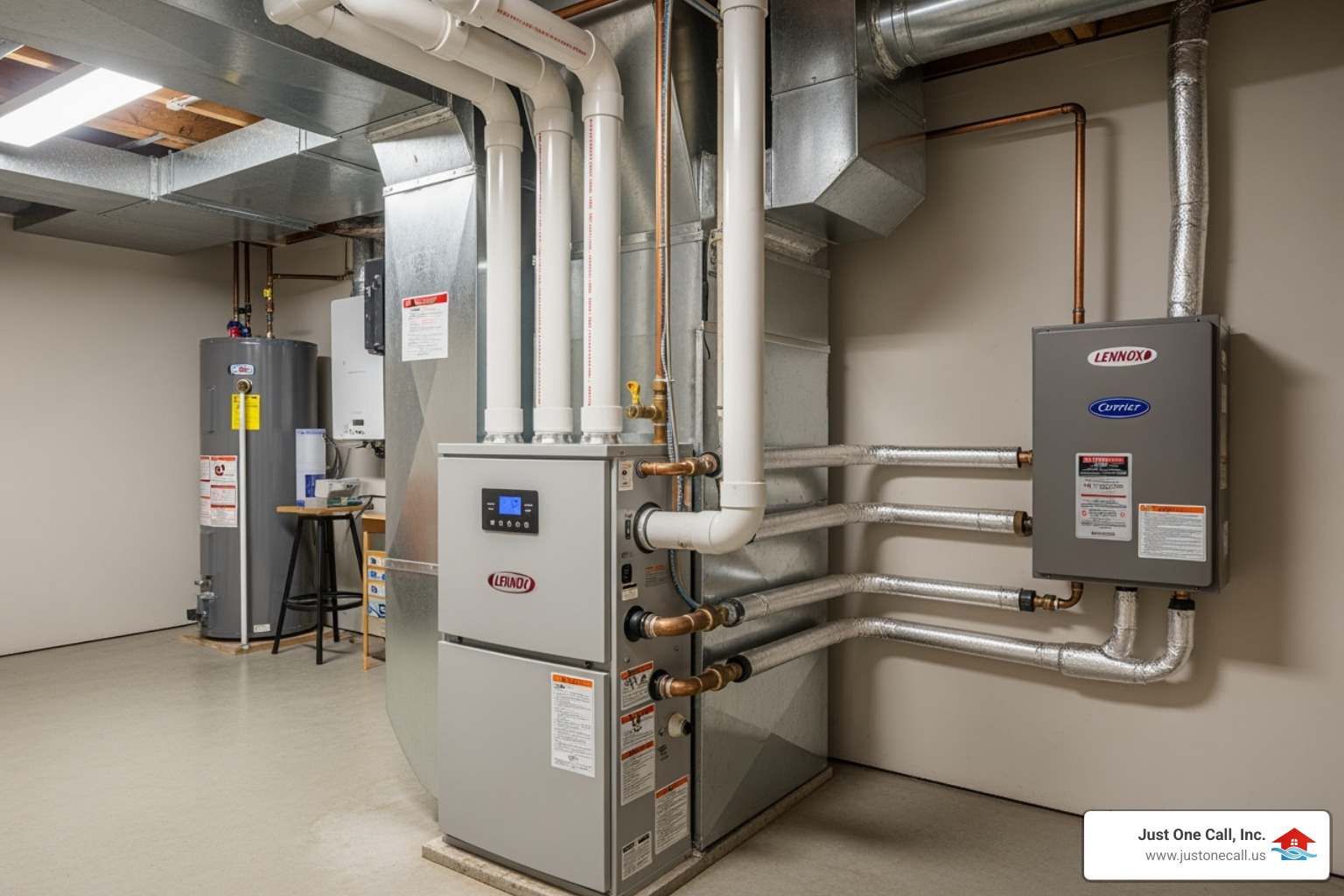
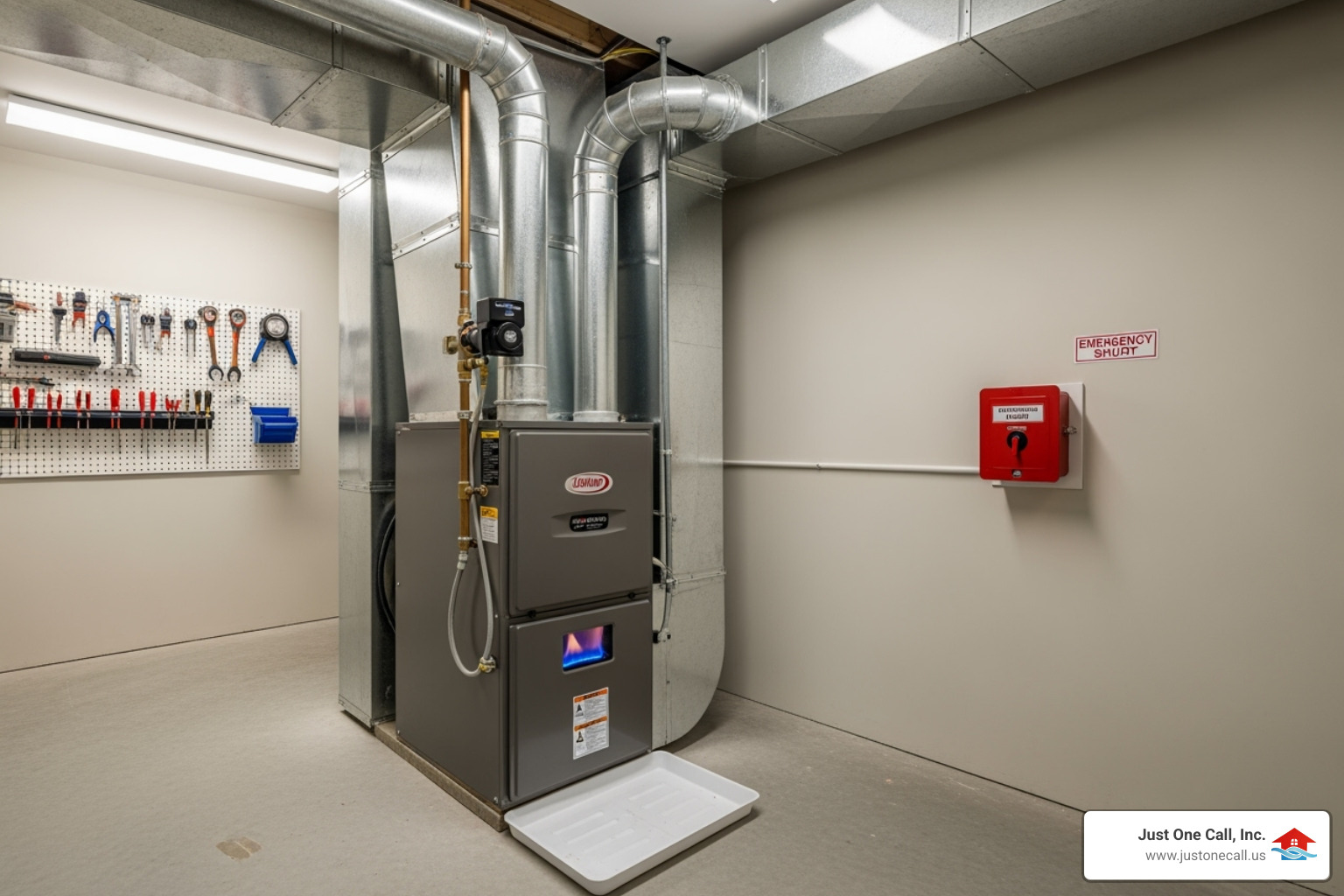
Why Your Burbank Home Deserves a Reliable Heating System
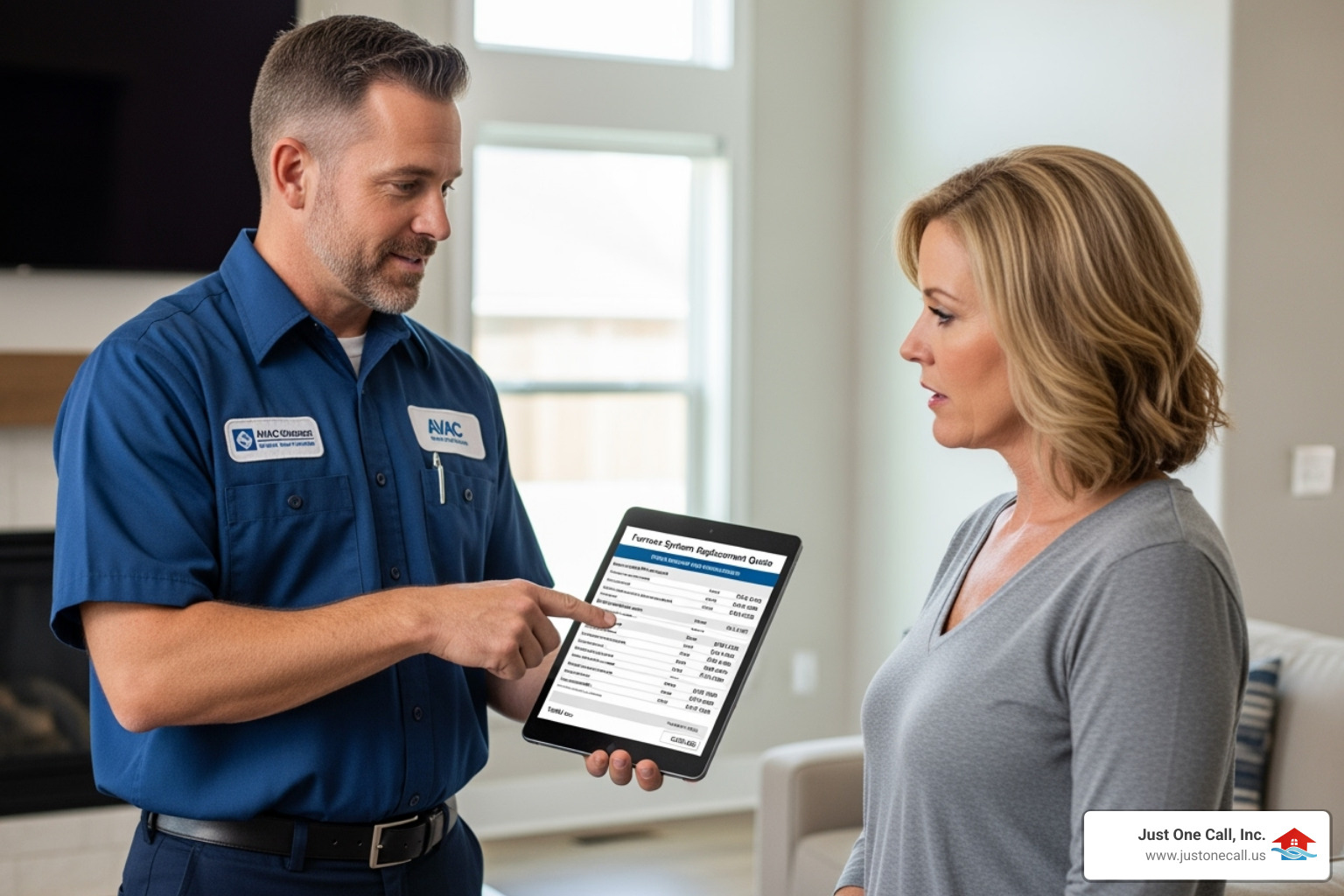
Furnace replacement burbank services become essential when your home’s heating system can no longer keep up with your comfort needs. If you’re experiencing frequent breakdowns, rising energy bills, or uneven heating, it may be time to upgrade your furnace.
Quick Answer for Burbank Homeowners:
Age: Replace furnaces over 15-20 years old
Cost: Gas furnaces $3,000-$7,500, Electric $2,000-$5,500
When to Replace: When repair costs exceed 50% of replacement cost
Professional Help: Contact licensed HVAC contractors for assessment
When the chill sets in across Burbank, you rely on a dependable heating system to keep your home warm and comfortable. Your furnace is truly your home’s heart – pumping warm air through every room to maintain the cozy environment your family deserves.
But furnaces don’t last forever. The normal lifespan of a furnace ranges between 12-17 years, with newer models surviving 20-25 years compared to around 15 years for older units. After 15 years, furnaces face a much greater risk of frequent issues that can leave you shivering on the coldest days.
Energy costs matter too. An aging, inefficient furnace can drive up your monthly bills while delivering inconsistent comfort. Modern high-efficiency units offer superior technological advances, greater energy efficiency, and quieter operation than older models.
Safety is another critical concern. Older furnaces risk carbon monoxide leaks and other hazards that put your family at risk. Regular maintenance helps, but eventually replacement becomes the smartest choice.
Key Signs Your Furnace Needs Replacing
Nobody wants to wake up on a cold Burbank morning to find their furnace has given up the ghost. The good news? Your heating system usually gives you plenty of warning signs before it completely fails. Recognizing these red flags early can save you from emergency situations and help you plan your furnace replacement burbank investment wisely.
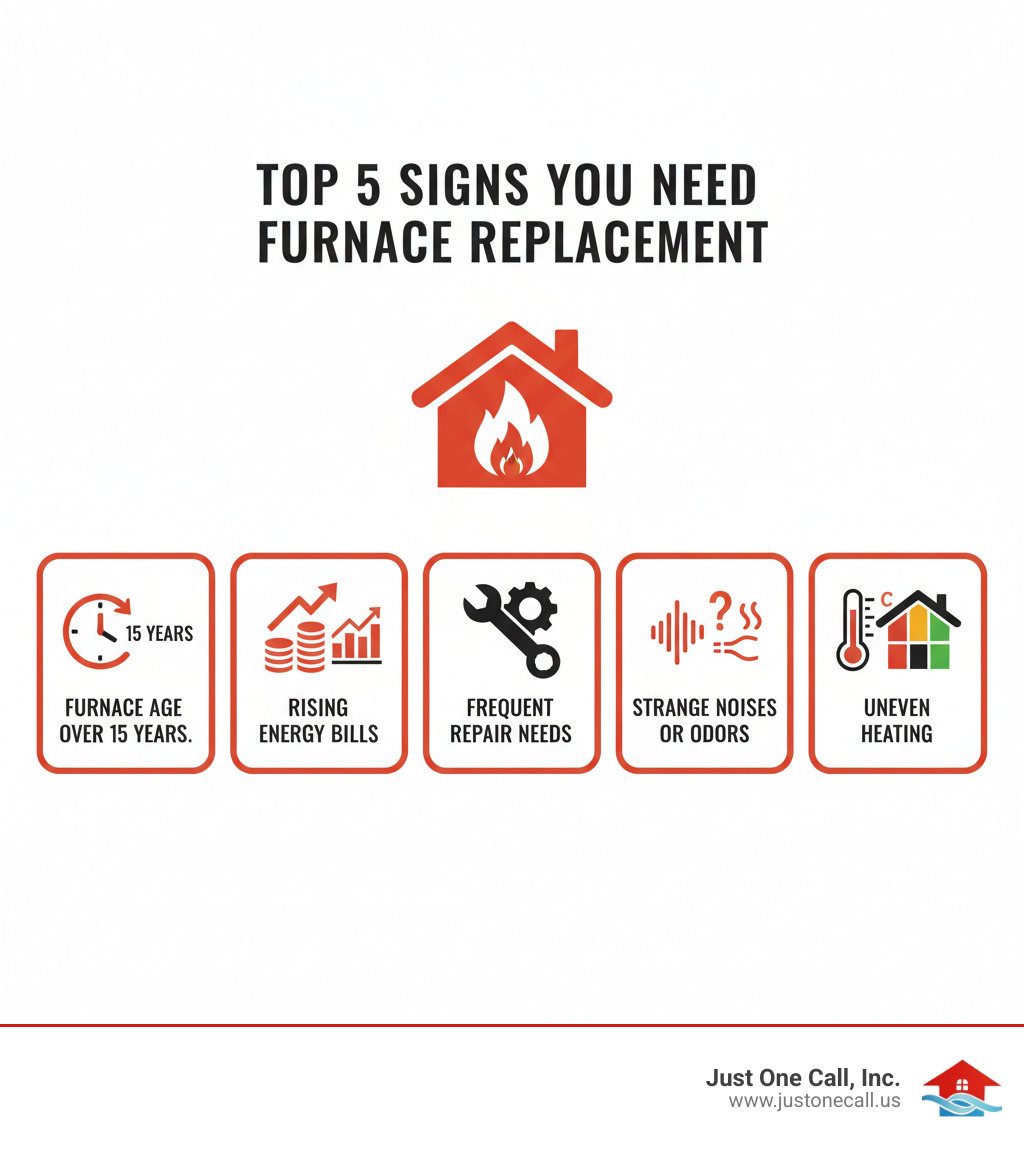
Age is the biggest factor when considering furnace replacement. Most furnaces have a lifespan of 15-20 years, though some well-maintained units can push toward 25 years. If your furnace is celebrating its 15th birthday or beyond, it’s time to start thinking about replacement—even if it’s still running. Older systems become increasingly unreliable and inefficient as they age.
Have you noticed your energy bills creeping up without any obvious explanation? An aging furnace loses efficiency over time, working harder and longer to heat your home to the same comfortable temperature. It’s like driving an old car that starts guzzling gas—eventually, the ongoing costs outweigh the benefits of keeping it running.
Frequent repairs are another clear warning sign. If you’re calling for service multiple times each heating season, those repair bills add up fast. More importantly, frequent breakdowns often signal that major components are wearing out. When one part fails, others usually aren’t far behind.
Here’s where the math gets interesting: consider the repair cost versus replacement cost carefully. If a single repair costs 50% or more of what a new furnace would cost, replacement makes more financial sense. You’ll get a brand-new system with a warranty instead of throwing good money after bad on an aging unit.
Strange noises from your furnace deserve immediate attention. Banging, squealing, grinding, or rumbling sounds often indicate serious mechanical problems like failing motors, cracked heat exchangers, or loose components. These aren’t just annoying—they can be dangerous.
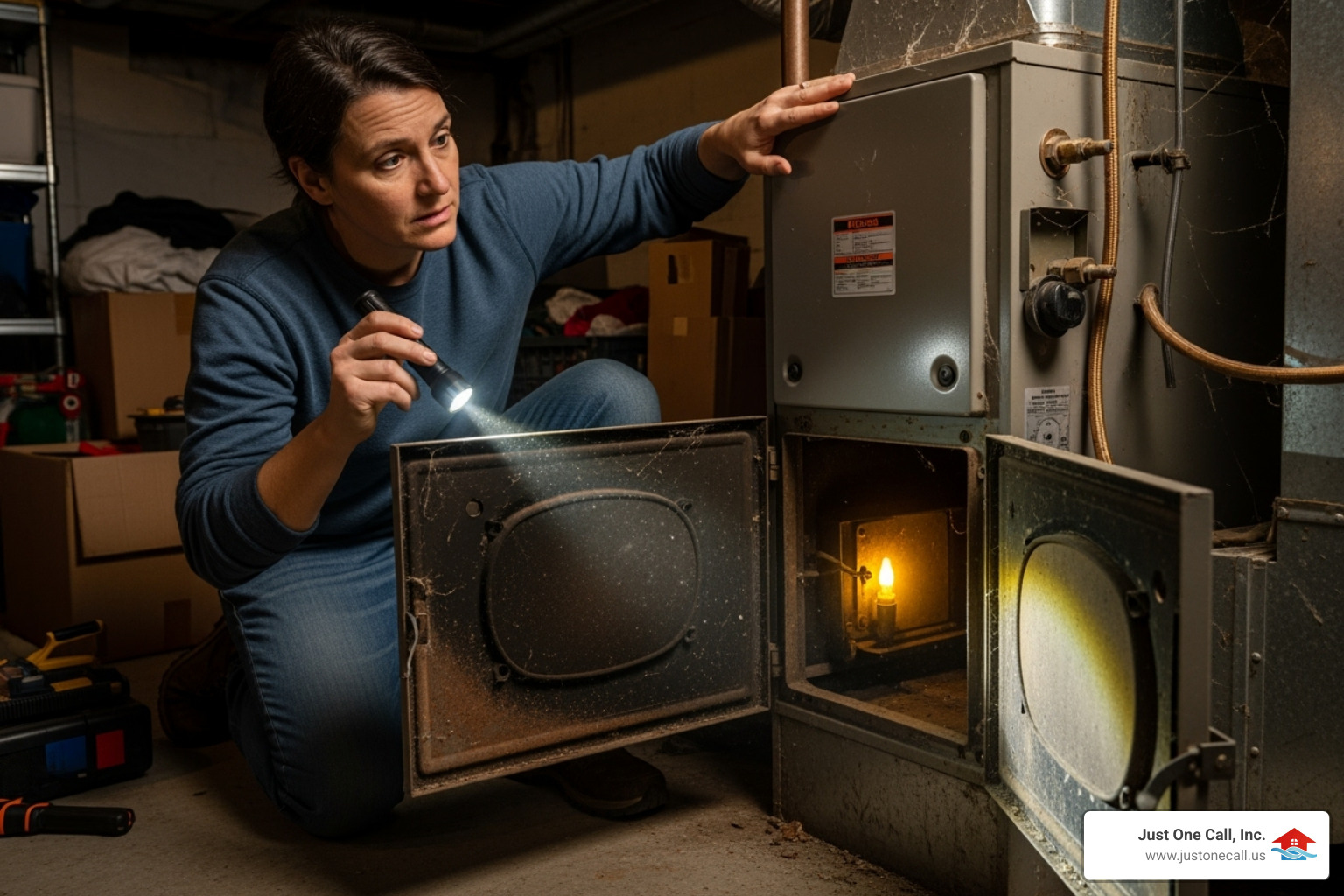
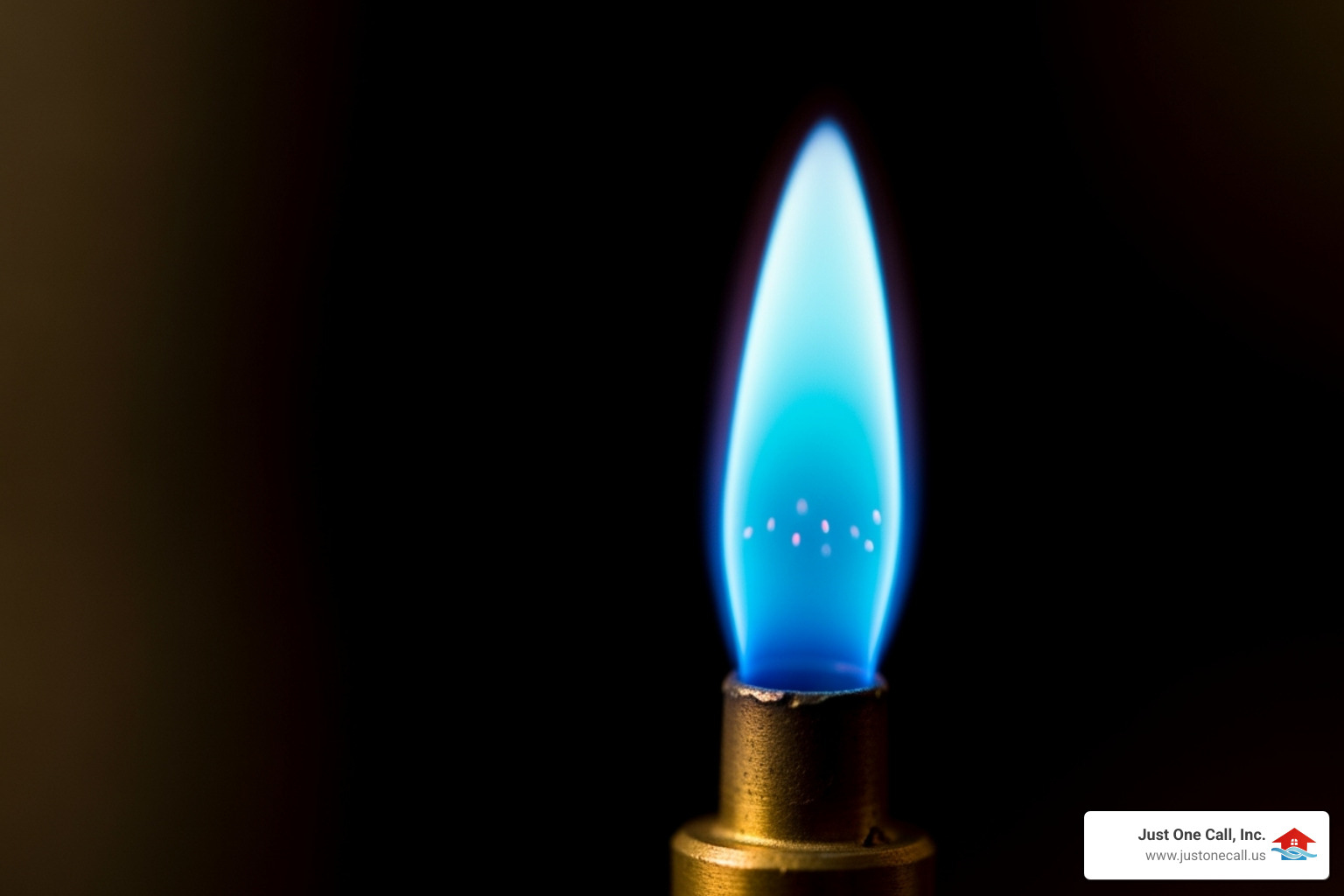
If your older furnace has a pilot light, watch for a yellow pilot light instead of the normal crisp blue flame. This yellow color indicates incomplete combustion, which can produce carbon monoxide—a serious safety hazard that puts your family at risk.
Poor indoor air quality can also trace back to an aging furnace. Dust accumulation, inconsistent airflow, and outdated filtration systems all contribute to stuffier, less healthy indoor air. You might notice more dust settling on surfaces or family members experiencing more allergy symptoms.
Finally, uneven heating throughout your home signals that your furnace can’t distribute warmth effectively anymore. Some rooms feel like saunas while others stay uncomfortably cold, no matter how much you fidget with the thermostat. This inconsistency means your system is struggling to do its job.
When to Repair vs. When to Opt for Furnace Replacement in Burbank
The repair-versus-replace decision doesn’t have to be a guessing game. Several clear guidelines can help you make the right choice for your Burbank home and budget.
The 50% rule provides an excellent starting point: when repair costs reach 50% or more of what a new furnace would cost, replacement becomes the smarter investment. This rule helps you avoid the trap of repeatedly fixing an aging system that will likely need more expensive repairs soon.
Furnace age over 15 years significantly tips the scales toward replacement. While proper maintenance can extend a furnace’s life, units beyond 15 years become increasingly prone to breakdowns and inefficiency. The technology in newer furnaces has improved dramatically, offering better performance and lower operating costs.
Safety risks should never be ignored or postponed. Older furnaces can develop cracks in heat exchangers, potentially allowing carbon monoxide to leak into your home. This colorless, odorless gas is deadly, making safety the top priority in any repair-versus-replace decision.
When to call for professional HVAC service is simple: as soon as you notice any of these warning signs. Our team at Just One Call, Inc. can assess your system honestly and help you understand whether repair or replacement makes the most sense for your situation. We’ll never push you toward an unnecessary purchase, but we’ll also be straight with you about when it’s time to move on from an aging furnace.
Getting a professional evaluation gives you the information you need to make a confident decision about your home’s heating future.
Understanding the Cost of Furnace Replacement in Burbank
Let’s talk about the elephant in the room – what’s this going to cost you? When it comes to furnace replacement burbank, the price tag can feel overwhelming at first glance. But understanding what goes into these costs helps you budget wisely and avoid any unwelcome surprises.
The reality is that furnace replacement costs vary quite a bit based on what you’re installing and how complex the job turns out to be. Gas furnaces are the most popular choice in our area, typically running between $3,000 and $7,500 for a complete replacement. If you’re considering an electric furnace, you’re looking at a range of $2,000 to $5,500 – generally less expensive upfront, though operating costs can be higher over time.
While less common around Burbank, some homes still use oil or propane systems. Oil furnace replacements can cost anywhere from $4,500 to $10,000, while propane systems typically fall between $3,500 and $8,500.
Now, those prices include the unit itself, but labor costs are a separate consideration. Professional installation usually adds between $1,000 and $3,000 to your total bill. The wide range reflects the reality that some installations are straightforward, while others require additional work like ductwork modifications or electrical upgrades.
Here’s something many homeowners don’t think about upfront: permits and inspections. In Burbank, you’ll need a permit for your furnace replacement to ensure everything meets local building codes and safety standards. The permit itself costs a couple hundred dollars, but skipping this step can create major headaches later if an inspector finds unpermitted work.
The inspection process typically involves three or four steps, checking everything from electrical connections to proper venting. You’ll also need a HERS report to finalize the permit. While some homeowners consider handling permits themselves, it’s usually smoother to let your HVAC contractor manage this process – they know the local requirements inside and out.
Factors That Influence Your Final Price
Several key factors determine whether you’ll end up at the lower or higher end of those price ranges. Think of it like buying a car – the base model gets you where you need to go, but additional features and complexity drive up the cost.
Furnace type makes the biggest difference in your final price. Gas units offer excellent efficiency and lower operating costs, making them popular despite higher upfront costs. Electric furnaces cost less initially but can be more expensive to run, especially during Burbank’s cooler months.
AFUE ratings – that’s Annual Fuel Utilization Efficiency – significantly impact both price and long-term savings. Standard efficiency units (80-85% AFUE) cost less upfront, while high-efficiency models (90%+ AFUE) require a bigger initial investment but save money on utility bills over time. Energy Star models represent the cream of the crop for efficiency.
Size matters too – and we’re talking BTU capacity here. A furnace that’s too small won’t keep your home comfortable, while an oversized unit wastes energy and cycles on and off too frequently. Our technicians calculate the right size based on your home’s square footage, insulation, and layout.
Installation complexity can really move the needle on costs. If your existing ductwork needs modifications, if the furnace location presents challenges, or if electrical upgrades are required, expect additional charges. Sometimes what looks like a straightforward replacement turns into a more involved project once we get into the details.
Brand choice also influences pricing, with premium manufacturers commanding higher prices for advanced features and longer warranties. At Just One Call, Inc., we work with trusted brands that offer the best balance of quality, reliability, and value for Burbank homeowners.
The good news? We offer financing options to help make your new furnace more affordable. Rather than waiting for a complete breakdown or struggling with an inefficient system, financing lets you upgrade now and spread the payments over time. Your monthly savings on energy bills often help offset the payment, making it easier on your budget.
When Your Heater Breaks Down in Burbank: Fast Help is Available
When you need 24 hour heating repair burbank services, you’re dealing with an urgent situation that can’t wait. A broken heater is more than an inconvenience, especially during an unexpected cold snap when Burbank’s nighttime temperatures can drop into the 50s.
Your heating system can fail at any time, day or night. That’s why it’s crucial to have access to a reliable company that offers a true 24-hour emergency response. When your heater fails, waiting isn’t an option.
Before calling for help, here are a few immediate steps you can take:
Check your thermostat settings.
Inspect the circuit breaker.
Look for gas odors (evacuate if you smell gas).
If these steps don’t work, call a certified technician immediately.
The good news is that fast, professional help is available. Local experts understand the area’s climate challenges and are ready to restore your comfort and safety without delay.
Recognizing a Heating Emergency: When to Make the Call
Even in Burbank’s mild winters, a heating emergency can quickly make your home uncomfortable. Your system often provides warning signs before a complete failure. Recognizing these signals can help you avoid a crisis and prevent more expensive repairs.
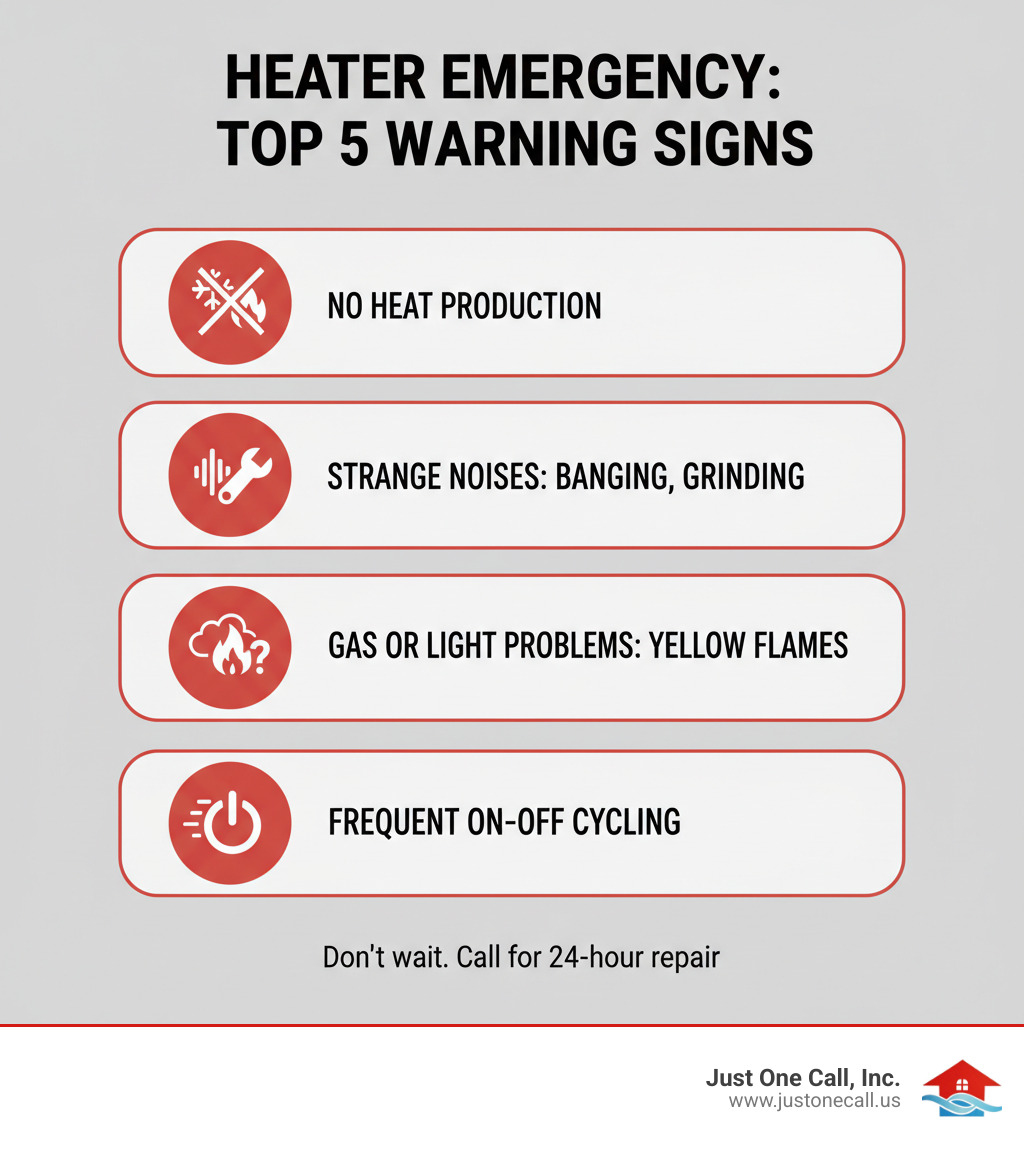
No heat production: The most obvious sign. If your system runs but blows cool air or won’t turn on, it’s an emergency. This could be a thermostat issue, tripped breaker, or mechanical failure.
Strange noises: Banging, squealing, or grinding sounds indicate trouble. A healthy heater should operate quietly.
Gas or burning smells: A rotten egg smell signifies a gas leak and requires immediate evacuation and a call to your gas company. A persistent electrical or plastic burning smell is a fire hazard that needs professional attention.
Pilot light issues: For gas furnaces, the pilot light should be a steady blue flame. A yellow, flickering, or extinguished flame is a safety concern, as it can indicate incomplete combustion and the production of carbon monoxide.
Poor air quality: Dusty or smoky air from vents points to dirty filters, clogged ducts, or system malfunctions.
Frequent cycling: If your system turns on and off in short bursts (“short cycling”), it wastes energy and signals an underlying problem.
If you notice these signs, it’s time to call for 24 hour heating repair Burbank services. For more details, see our guide on signs that you need furnace repair.
What to Listen For: Decoding Strange Heater Noises
Banging or popping: Can be caused by ductwork expanding or, more seriously, delayed gas ignition in your furnace.
Squealing or screeching: Often points to a worn fan belt or blower motor bearings that need lubrication. Ignoring this can lead to motor failure.
Grinding sounds: A serious sign that motor bearings are failing. The motor could seize up, requiring a costly replacement.
Constant clicking: May indicate a problem with the ignitor or control board trying to start the system.
What to Smell For: Odors That Signal Danger
Rotten egg smell: This indicates a natural gas leak. Evacuate your home immediately, and from a safe distance, call your gas company and a heating professional. Do not use any electronics or create sparks inside.
Burning dust vs. electrical burning: A brief dusty smell when first using your heater is normal. A persistent burning smell, like plastic or rubber, suggests an electrical problem that could cause a fire.
Musty odors: Often a sign of mold or mildew in your ductwork due to moisture, which impacts indoor air quality.
What to Do Immediately When Your Heater Fails
When your heating system fails on a cold night, it’s stressful. Fortunately, there are simple steps you can take that might solve the problem or help a technician diagnose it faster when you call for 24 hour heating repair burbank services.
Safety first: If you smell gas (a rotten egg odor), see sparks, or suspect any immediate danger, shut off your gas supply if it’s safe to do so, evacuate your home, and call emergency services from a safe location.
If there’s no immediate hazard, try these quick troubleshooting steps:
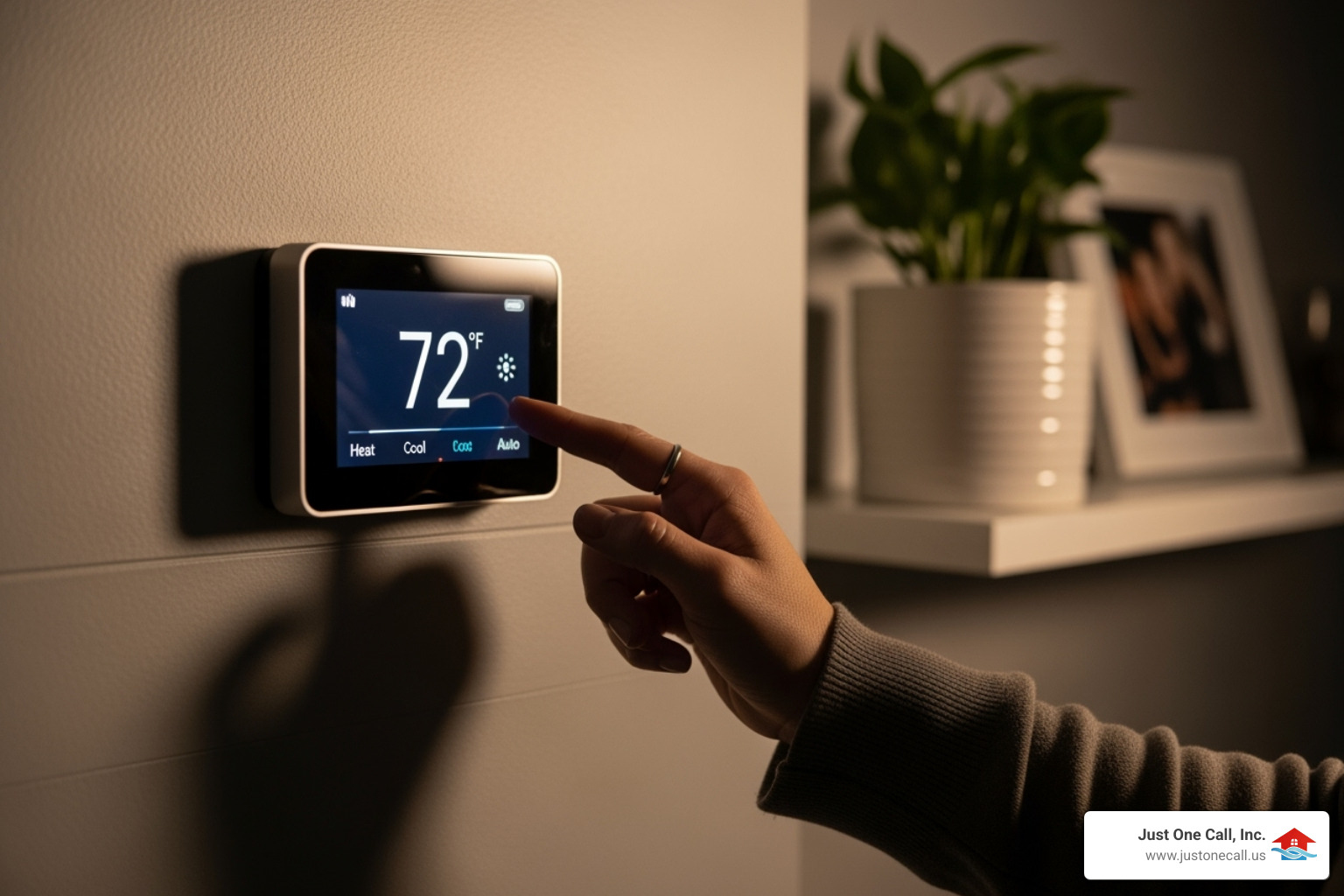
Check your thermostat: Ensure it’s set to “heat” and the temperature is set higher than the current room temperature. Check the batteries if it’s a battery-powered model.
Inspect the circuit breaker: Find the breaker for your furnace or HVAC system in your electrical panel. If it has tripped, reset it once. If it trips again, call a professional, as this indicates an electrical fault.
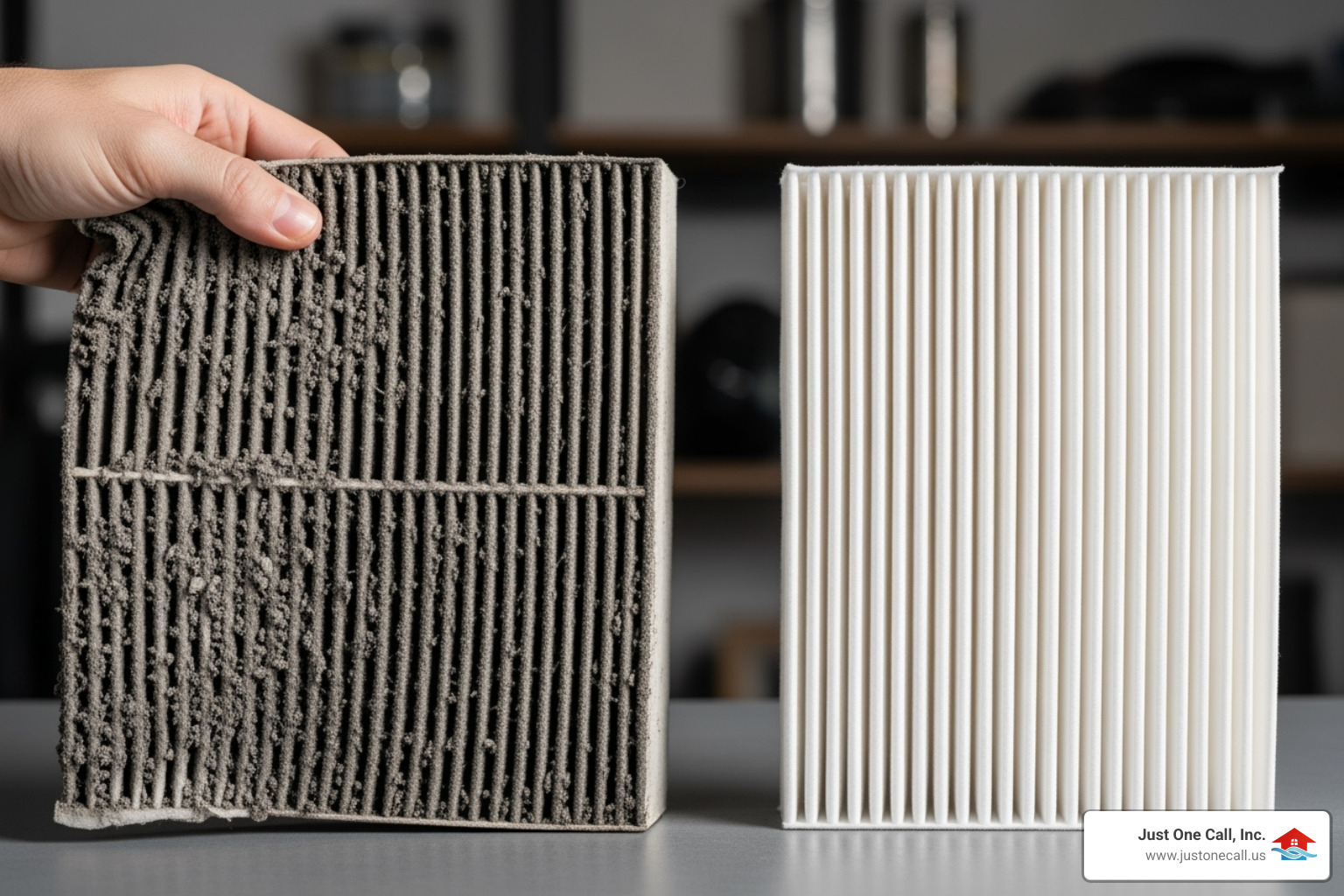
Check your air filter: A severely clogged filter can cause your system to shut down as a safety precaution. Replacing a dirty filter might be all it takes to get your heat back on.
Check thermostat: Verify it’s set to heat and the temperature is above the current room temperature.
Check power: Look for a tripped breaker in your electrical panel and reset it once.
Check filter: Replace if it is visibly clogged with dust and debris.
Smell for gas: If you detect a rotten egg odor, evacuate immediately and call for help.
Call a professional: If these steps don’t work, it’s time to call for emergency service.
Safety Precautions for Gas Furnace Issues
Gas furnaces are reliable but require caution when problems arise.
Identifying a gas leak: The primary sign is a rotten egg smell. You might also hear a hissing sound near gas lines.
Evacuate the home: If you suspect a leak, get everyone out immediately. Do not delay.
Contact the gas company: Once you are safely outside, call your gas company’s emergency line and 911.
Do not use electronics: Do not flip light switches, use your phone, or turn on any appliances inside the home. A tiny spark can ignite gas.
Do not create sparks: Avoid using matches, lighters, or even starting a car in an attached garage.
These precautions are vital for your safety. Always prioritize safety and call for professional help when dealing with potential gas issues.
Finding Reliable 24 Hour Heating Repair in Burbank
When your heater fails, you need a repair service that is not only fast but also trustworthy and experienced. For residents of Burbank, CA, finding reliable 24 hour heating repair burbank is about peace of mind. Our commitment is to provide professional, honest, and efficient service with just one call.
As a local company, we understand Burbank’s climate and the specific demands it places on heating systems. Our technicians are highly skilled and familiar with the systems common in Burbank homes, ensuring custom and effective solutions. For more on our local services, visit Burbank, CA Air Conditioning & Heating.
How to Choose the Best 24 Hour Heating Repair Burbank Service
When choosing an emergency repair service, consider the following:
Licensing and Insurance: Ensure the company is fully licensed and insured to protect you from liability.
Recent Reviews: Check customer testimonials for feedback on professionalism, response time, and effectiveness.
Emergency Availability: A true 24-hour service should have clear policies on emergency response times.
Warranties: Ask about warranties on parts and labor to ensure the repair is guaranteed.
Certified Technicians: Look for companies with NATE-certified technicians, which indicates a high level of expertise. Our team is NATE-certified.
Transparent Pricing: A reputable company will provide a clear, upfront estimate before starting any work, even for emergency calls.
What Services to Expect from a 24 Hour Heating Repair Burbank Company
An emergency heating repair service should offer comprehensive solutions to restore your comfort quickly.
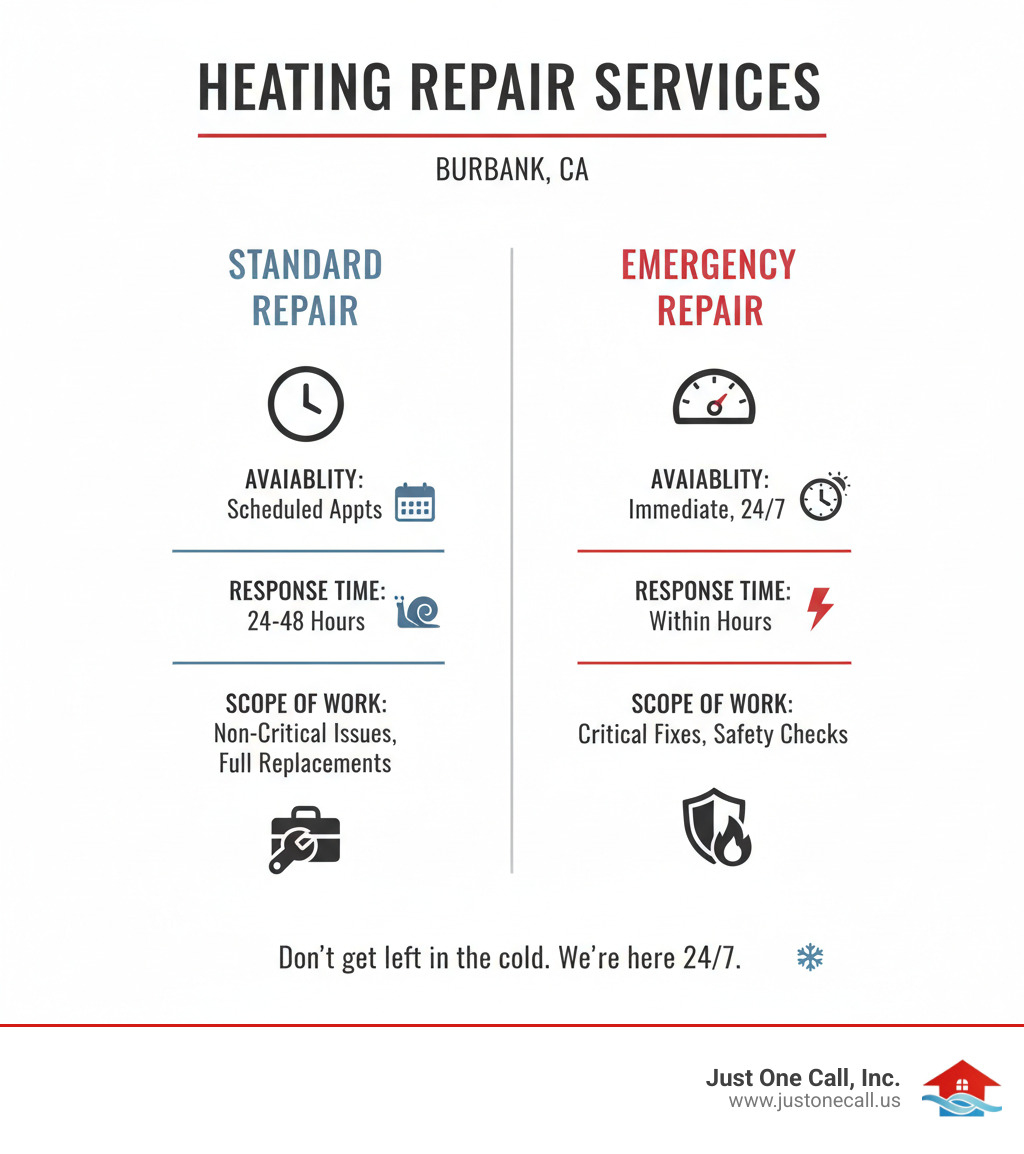
Service Aspect
Standard Repair (During Business Hours)
Emergency Repair (24/7)
Availability
Scheduled appointments
Immediate dispatch, 24/7, including holidays
Response Time
Varies, usually within 24-48 hours
Priority dispatch, often within a few hours
Diagnostics
Thorough system inspection
Rapid diagnosis to identify critical issues
Component Repair
Standard parts replacement
Access to common parts for immediate fixes
System Replacement
Scheduled for non-emergency situations
Temporary fixes; full replacement scheduled if needed
Safety Inspections
Routine checks during maintenance
Immediate safety checks (e.g., carbon monoxide)
Thermostat Issues
Troubleshooting and replacement
Urgent troubleshooting, temporary solutions
Gas Leak Detection
Not typical, specialized service
Immediate detection and shut-off procedures
Electrical Troubleshooting
Standard electrical checks
Urgent identification of electrical faults
When you call us for an emergency, expect rapid diagnostics, on-the-spot component repair, and immediate safety inspections. We service all major heating system types, including furnaces, heat pumps, and ductless mini-splits. Our goal is to resolve the underlying issue for lasting comfort and peace of mind.
Preventing Future Breakdowns with Proactive Maintenance
While we are always ready for your 24 hour heating repair burbank call, our goal is to help you avoid emergencies altogether. Regular maintenance is the key to a reliable and efficient heating system, especially in Burbank’s climate where heaters sit idle for months before being called into action.
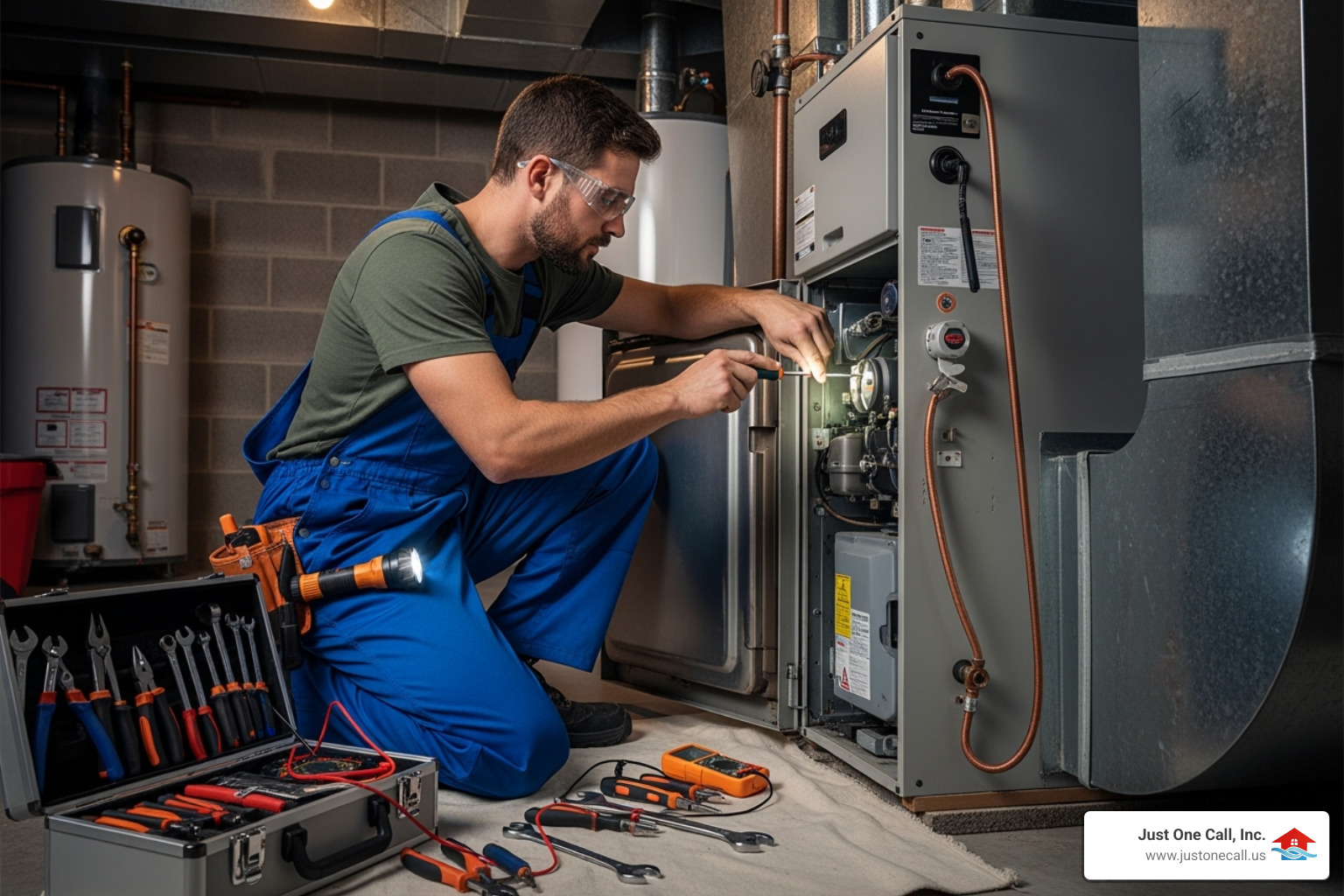
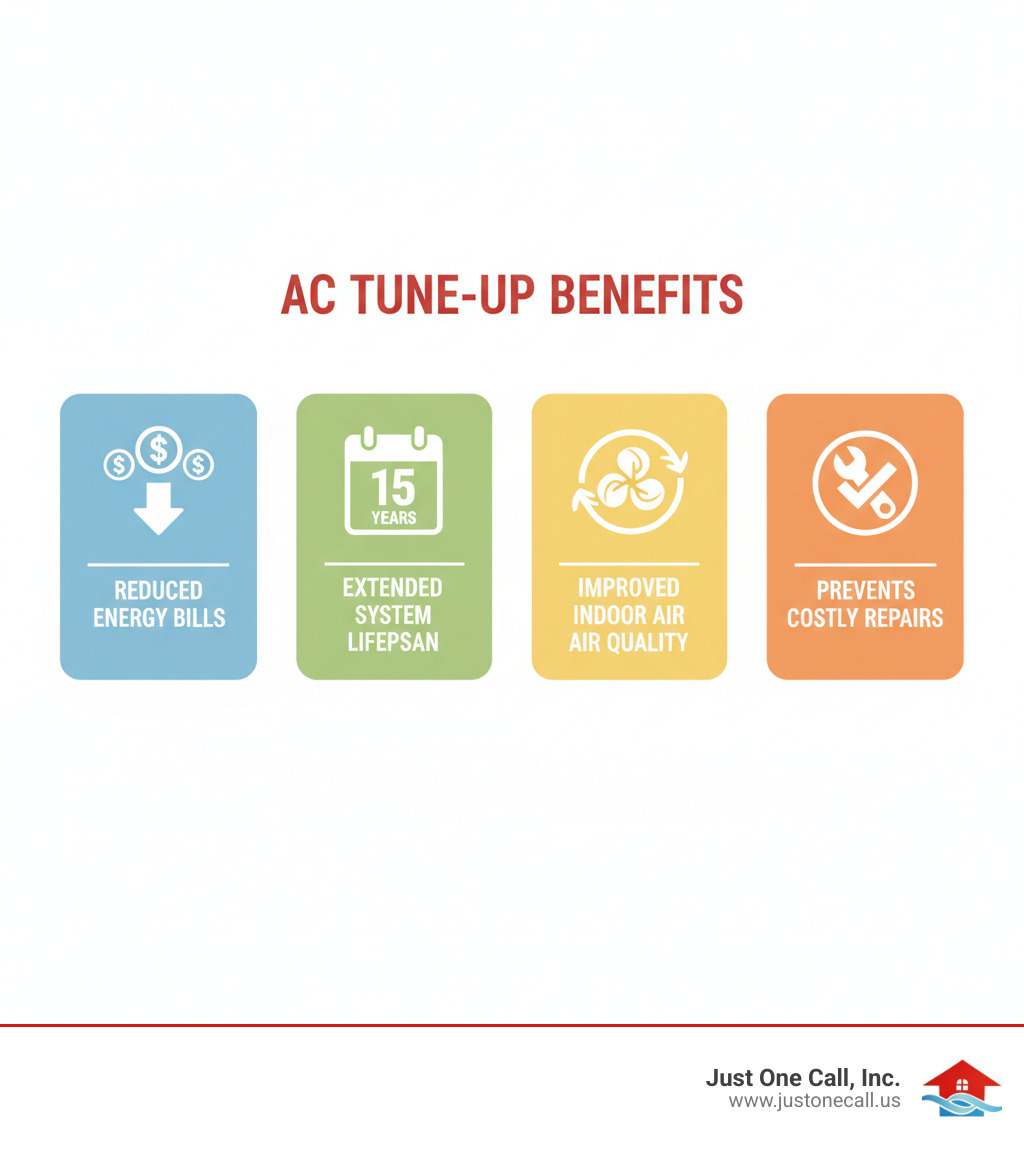
A seasonal tune-up is like an oil change for your car—it prevents major breakdowns, improves efficiency, and extends the life of your equipment. Our technicians can spot and fix minor issues before they become expensive problems, ensuring your system is ready when you need it. The benefits include lower energy bills, fewer repairs, improved safety, and better indoor air quality.
Change air filters regularly: A clogged filter restricts airflow, wastes energy, and can cause your system to overheat.
Keep vents clear: Ensure registers and vents are not blocked by furniture or rugs to allow for even heat distribution.
Test your thermostat: Before the cold weather arrives, switch your system to “heat” to make sure it turns on correctly.
Schedule a professional tune-up: This is the most important step. A technician will clean, inspect, and tune your system for safety and performance.
Inspect for visible wear: Look for rust, frayed wires, or debris around your unit and report any concerns to your technician.
The Long-Term Benefits of Regular Maintenance
Investing in regular maintenance pays for itself over time.
Lower energy bills: A well-tuned system uses less energy, saving you money each month.
Fewer costly repairs: Catching small problems early prevents them from turning into expensive breakdowns.
Improved safety: Technicians check for gas leaks, carbon monoxide risks, and electrical hazards.
Consistent home comfort: A maintained system provides even, reliable heating throughout your home.
Better indoor air quality: Cleaning components and changing filters reduces dust and allergens in your air.
Extended system lifespan: Regular care can add years to your heating system’s life, delaying the need for a costly replacement.
Frequently Asked Questions about Emergency Heating Repair
When your heater fails unexpectedly, you likely have questions. Here are answers to some of the most common inquiries we receive from Burbank residents needing 24 hour heating repair burbank services.
How quickly can a technician arrive for an emergency in Burbank?
While exact arrival times can vary due to traffic and call volume, we prioritize emergency calls to get a technician to you as quickly as possible, typically within a few hours. Our 24/7 availability means you won’t have to wait until the next business day for help. Our technicians arrive in fully stocked trucks, prepared to make repairs on the first visit.
Is it more expensive to get my heater repaired at night or on a weekend?
Yes, emergency service outside of normal business hours typically has a higher rate. This covers the cost of having certified technicians on-call 24/7, including nights, weekends, and holidays. However, we are committed to transparent pricing. Our technician will diagnose the issue and provide you with a clear, upfront cost for the repair. You approve the price before any work begins, so there are no surprises. The added cost of an emergency call is often far less than the potential damage from issues like frozen pipes.
In many cases, yes. The decision to repair or replace an older furnace depends on several factors. Most furnaces last 15-20 years, but maintenance history is key. We consider:
Part availability: Components for very old models can be difficult or impossible to find.
Repair cost: If a repair costs 50% or more than a new unit, replacement is often the more economical choice.
Safety: If the furnace has a critical safety issue, like a cracked heat exchanger, it must be replaced.
Energy efficiency: A new, high-efficiency furnace can offer significant savings on your utility bills, making replacement a smart long-term investment.
Our technicians will provide an honest assessment and help you make the best decision for your home and budget. For more information, visit our Emergency Furnace Repair Glendale, CA page.
Your Partner for All Heating Emergencies
When your heating system fails on a cold Burbank night, you need a reliable partner you can count on. At Just One Call, Inc., we are committed to restoring your comfort and peace of mind.
To avoid stress and costly repairs, remember these key principles:
Act fast: Address warning signs like strange noises or smells immediately to prevent small issues from becoming major failures.
Stay safe: If you smell gas, evacuate your home first and call for emergency help from a safe location. Your safety is the top priority.
Prevention is key: Regular professional maintenance is the best way to prevent breakdowns, improve efficiency, and extend the life of your system.
What sets us apart is our commitment to treating your home like our own. Our NATE-certified technicians provide expert diagnostics, honest advice, and transparent pricing. We don’t just fix machines; we restore the comfort that makes your house a home.
When your heating system lets you down in Burbank, don’t be left in the cold. We are here 24/7, ready to respond when you need us most. For immediate assistance or to schedule preventative maintenance, contact us for 24/7 Emergency Heating Repairs Available.
You’re never more than one call away from getting your comfort back.
Why Your Glendale AC System Needs Regular Professional Care
If you’re looking for ac tune up glendale services, here’s what you need to know right away:
Quick Answer for Glendale Residents:
Best time to schedule: Spring (before summer heat arrives)
Frequency: Once per year for optimal performance
Typical cost: Small investment that prevents expensive repairs
Duration: 60-90 minutes for comprehensive service
Key benefits: Lower energy bills, fewer breakdowns, cleaner air
Living in Glendale means your air conditioning system works overtime during those scorching summer months. When temperatures soar into the mid-80s and beyond, your AC becomes your lifeline to comfort.
But here’s what most homeowners don’t realize: a well-maintained air conditioning system can last up to 15 years, while a neglected one might fail when you need it most. Regular maintenance helps catch minor issues before they escalate into larger, more expensive problems.
The good news? Annual AC tune-ups are one of the smartest investments you can make for your home’s comfort and your wallet. Routine maintenance of your existing system can prolong its lifespan while ensuring your condenser isn’t working harder than necessary to keep you cool.
Think of it this way – you wouldn’t skip oil changes for your car, so why skip tune-ups for the system that keeps your family comfortable year-round?
Why an AC Tune-Up is Non-Negotiable in Glendale
Let’s be honest – Glendale’s beautiful weather comes with a price. When summer hits, those gorgeous sunny days can push temperatures into the triple digits, and your air conditioning system suddenly becomes the hardest-working appliance in your home.
Unlike folks in milder climates who might run their AC a few months out of the year, your system is pulling double duty. It’s working longer hours, handling more extreme heat, and dealing with the constant stop-and-start cycle that comes with our desert climate. This isn’t just tough on your system – it’s a recipe for unexpected breakdowns right when you need cooling the most.
That’s exactly why getting an ac tune up glendale service isn’t optional – it’s essential for survival in our climate. Think of it as giving your AC system the strength training it needs to handle what Glendale throws at it.
Here’s what regular maintenance delivers for your home and wallet:
Lower energy bills become a reality when your system doesn’t have to fight against dirty coils and clogged filters. A well-tuned AC moves air efficiently, meaning it reaches your desired temperature faster and uses less electricity doing it. Many homeowners see noticeable drops in their monthly utility costs after their first tune-up.
Fewer breakdowns happen because our technicians catch the small stuff before it becomes big, expensive problems. A loose electrical connection or worn belt might seem minor, but in Glendale’s heat, these little issues can cause your entire system to fail on the hottest day of the year.
Improved indoor air quality makes a huge difference for your family’s comfort and health. When components like evaporator coils get dirty, they can harbor dust, allergens, and even mold that gets circulated throughout your home. Regular cleaning keeps the air you breathe fresh and clean.
Consistent cooling throughout your home means no more hot spots in certain rooms or uneven temperatures that leave some family members uncomfortable. A properly maintained system distributes cool air evenly and maintains steady temperatures.
The bottom line? Annual tune-ups protect your investment and keep your family comfortable when the Glendale heat is at its worst. For a deeper dive into why this matters so much, check out our guide on Why Regular AC Maintenance is Essential and find all the Annual AC Tune-Up Benefits. You can also learn more about the climate in Glendale, Arizona to understand just how demanding our weather can be on cooling systems.
The Professional AC Tune-Up Checklist: What to Expect
When you schedule an ac tune up glendale service with us, you’re getting much more than a quick once-over. Think of it as a comprehensive health check-up for your cooling system – one that could save you hundreds (or even thousands) in emergency repairs down the road.
Our technicians arrive with a detailed checklist that covers every component of your AC system. We don’t just peek at a few parts and call it good. Instead, we methodically work through your entire system to ensure everything is clean, calibrated, and ready to handle whatever Mother Nature throws at us. You can learn more about our thorough approach on our AC Maintenance Glendale CA page.
Here’s what happens during your tune-up visit:
Indoor Unit Inspection
Your indoor unit works hard behind the scenes, and it deserves some attention. We start with thermostat calibration because even a few degrees off can make your system work overtime. A miscalibrated thermostat is like having a broken speedometer in your car – you never quite know what’s really happening.
Next comes air filter replacement. This might seem simple, but a dirty filter is one of the biggest efficiency killers we see. It’s like trying to breathe through a dirty sock – your system has to work so much harder to pull air through. We’ll check your current filter and swap it out if needed, plus recommend the best type for your home’s specific needs.
The blower components get a thorough inspection too. These parts move all that beautiful cool air throughout your home, so we make sure they’re clean and running smoothly. Nobody wants a noisy blower motor interrupting their favorite TV show.
We also tackle condensate drain line cleaning. This little drain removes moisture from your system, but when it gets clogged, you can end up with water damage or even mold growth. We clear any blockages to keep everything flowing properly.
Finally, we clean your evaporator coil – the component that actually absorbs heat from your indoor air. Over time, it collects dust and grime that acts like a blanket, preventing it from doing its job effectively. A clean coil means better cooling and lower energy bills.
Outdoor Unit Inspection
Your outdoor unit faces the elements every day, so it needs special attention. We start with condenser coil cleaning because dirt, leaves, and even cottonwood fluff can coat these coils and make your system work much harder than necessary.
The fan motor and blade inspection ensures everything is spinning properly and securely mounted. A loose fan blade can create vibrations that damage other components – and trust us, you don’t want to hear what that sounds like at 2 AM.
We also provide lubrication of moving parts because friction is the enemy of any mechanical system. Proper lubrication keeps everything running smoothly and quietly while preventing premature wear.
Clearing debris might sound basic, but you’d be amazed at what we find around outdoor units. Leaves, twigs, toys, and sometimes even small animals have made themselves at home near AC units. We clear everything away to ensure proper airflow.
System-Wide Checks
The real magic happens when we look at how all these components work together. Our refrigerant level check ensures your system has the right amount of this crucial fluid. Too little refrigerant means poor cooling and higher energy bills. Too much can damage your compressor.
We also handle electrical connection tightening because loose connections are both dangerous and inefficient. Heat builds up at loose connections, which can lead to component failure or even fire hazards.
Our start-up and shut-down cycle testing verifies that your system turns on and off properly, following the correct sequence. This prevents hard starts that can damage components over time.
Finally, we inspect your ductwork for leaks, obstructions, or damage. Even the most efficient AC unit can’t overcome leaky ducts that let your expensive cooled air escape into your attic or crawl space. This comprehensive approach helps ensure your AC Service System Running Smoothly.
This thorough process typically takes 60-90 minutes, depending on your system’s condition. By the time we’re finished, your AC will be ready to handle whatever Glendale’s climate throws at it.
Your Guide to Scheduling an AC Tune Up Glendale Service
Think of scheduling your ac tune up glendale service like planning a vacation – timing is everything. The sweet spot for annual maintenance is spring, before our legendary Glendale heat kicks into high gear. This gives your system a clean bill of health right when you need it most, helping you avoid those dreaded mid-summer breakdowns when everyone else is calling for emergency repairs.
Getting ahead of the game with spring maintenance means your AC is ready to handle whatever Mother Nature throws at us. Plus, HVAC companies typically have more availability in spring, so you can schedule at your convenience rather than waiting days for an emergency call. For tips on maximizing your system’s performance, check out how to Boost Efficiency with AC Tune-Up Services.
Warning Signs Your AC Needs an AC Tune Up Glendale Service
Your air conditioning system has its own way of asking for help – you just need to know how to listen. Weak airflow is often the first cry for attention, usually pointing to a clogged filter, blower issues, or ductwork problems that need professional eyes.
Strange sounds coming from your unit are like your AC’s way of waving a red flag. Grinding, squealing, or banging noises typically mean mechanical parts are crying out for help before they fail completely. Similarly, unusual odors – whether musty smells suggesting mold growth or burning scents hinting at electrical troubles – should never be ignored.
When your AC starts blowing warm air from the vents, it’s clearly not doing its job. This could signal anything from low refrigerant to compressor problems. High indoor humidity is another telltale sign, as your system should naturally dehumidify your home while cooling it.
Keep an eye on your energy bills too. Rising costs without increased usage often mean your system is working overtime due to inefficiency. Finally, frequent cycling – when your unit turns on and off more often than usual – suggests underlying issues that need professional diagnosis.
DIY vs. Professional Maintenance
We love homeowners who want to take care of their systems, and there are definitely some tasks you can handle safely on your own. Changing air filters every 1-3 months is probably the most important thing you can do yourself – it’s simple, effective, and keeps your system breathing easy.
You can also help your outdoor unit by clearing away debris like leaves and grass clippings that might block airflow. Just make sure to keep those indoor vents clear of furniture and curtains too.
But here’s where we draw the line – some jobs require professional expertise for good reason. Refrigerant handling involves hazardous chemicals that need special licensing and training. Electrical work on high-voltage components can be dangerous, and comprehensive diagnostics require specialized tools and years of experience.
There’s also the warranty factor to consider. Many manufacturers require professional maintenance to keep your coverage valid, so skipping professional tune-ups could leave you paying for expensive repairs out of pocket.
Choosing the Right HVAC Company in Glendale
Finding the right company for your ac tune up glendale service shouldn’t feel like rolling the dice. Start by looking for NATE-certified technicians – this certification means they’ve passed rigorous industry exams and really know their stuff.
Always verify that any company you’re considering is licensed and insured. This protects you if something goes wrong during service. Positive customer reviews on Google, Yelp, and the Better Business Bureau can give you real insights into how a company treats its customers.
Transparent pricing is non-negotiable – you should know exactly what you’re paying before any work begins. Look for companies with local experience too, because understanding Glendale’s specific climate challenges makes a real difference in service quality.
Finally, choose a provider that offers comprehensive services so you have one trusted partner for all your HVAC needs. At Just One Call, Inc., we believe in being that reliable partner, offering everything from tune-ups to complete system installations. Learn more about our full range of HVAC Company Services Glendale CA.
The Financial Benefits of Regular Maintenance
Let’s talk about something every homeowner loves: saving money. When you invest in regular ac tune up glendale service, you’re not just maintaining your comfort – you’re making one of the smartest financial decisions for your home. While there’s an upfront cost for maintenance, the long-term savings and value make it a no-brainer investment.
Think of it this way: would you rather spend a small amount each year on preventive care, or face a massive repair bill (or complete replacement) during the hottest day of summer? We’ve seen too many homeowners learn this lesson the hard way.
Impact on Energy Efficiency and Utility Bills
Here’s where the magic really happens – your monthly utility bills. A well-maintained AC system is like a well-tuned car: it simply runs more efficiently and costs less to operate.
When your evaporator and condenser coils are clean, your system doesn’t have to work overtime to transfer heat. Dirty coils are like trying to breathe through a clogged nose – everything becomes harder and less efficient. Our tune-ups ensure these critical components are spotless, allowing your system to cool your home without breaking a sweat (or your budget).
Proper refrigerant levels are equally crucial. When refrigerant runs low, your compressor works much harder to achieve the same cooling effect. It’s like trying to pump water through a nearly empty pipe – lots of effort with little result. We make sure your system has exactly the right charge to operate smoothly.
The result? Reduced energy consumption that you’ll notice on your monthly bills. A well-maintained air conditioning system operates closer to its original factory specifications, cooling your home effectively without wasting energy. Many of our customers see noticeable savings that help offset the cost of maintenance within just a few months.
For additional ways to maximize your savings, check out these helpful Tips for energy savings that complement regular maintenance.
Extending Your AC’s Lifespan
Your AC system represents a significant investment – typically several thousand dollars. Regular maintenance is your best strategy for protecting that investment and getting every possible year out of your system.
Preventing wear and tear is at the heart of what we do during each tune-up. When we lubricate moving parts, tighten electrical connections, and ensure all components are clean and functioning correctly, we’re reducing friction and stress throughout the system. This prevents premature aging of expensive components like your compressor and fan motor.
Even more important is preventing catastrophic failure. Small problems have a way of becoming big, expensive problems if left unchecked. A dirty filter can strain your blower motor. Loose electrical connections can damage sensitive components. Low refrigerant can destroy your compressor. We catch these issues early, before they create a domino effect of failures.
The payoff is substantial: a well-maintained system can last up to 15 years, providing reliable cooling through many hot Glendale summers. Without regular care, systems often fail prematurely, sometimes cutting their lifespan in half. By extending your unit’s life, you’re deferring the significant cost of replacement while maximizing your original investment.
Finding an HVAC Maintenance Plan for your AC Tune Up Glendale
Want to make maintenance even easier and more cost-effective? Our HVAC maintenance plans are designed specifically for Glendale homeowners who want maximum value and peace of mind.
Seasonal maintenance plans typically include your annual AC tune-up (and often heating system service in the fall), ensuring your equipment is ready for whatever Mother Nature throws at it. You’ll never have to worry about forgetting to schedule service – we handle the reminders for you.
Priority service is a game-changer during peak season. When everyone’s AC decides to quit on the same 95-degree day, our maintenance plan members get bumped to the front of the line. That alone can be worth the cost of the plan.
The financial benefits continue with discounted repair rates for plan members. If your system does need repairs, you’ll pay less than standard rates. Plus, there’s tremendous peace of mind knowing your system receives regular professional attention from technicians who understand Glendale’s demanding climate.
Scheduling becomes effortless when you’re on a maintenance plan. We track when your system is due for service and reach out to you, taking one more thing off your busy schedule.
Ready to start saving? Explore our HVAC Maintenance Plan Glendale CA options to find the perfect fit for your home and budget. Your future self (and your wallet) will thank you.
Frequently Asked Questions about AC Tune-Ups
We know choosing an ac tune up glendale service can bring up plenty of questions. After years of helping Glendale homeowners keep their cool, we’ve heard them all! Here are the answers to the most common questions we get.
What is the typical cost of an AC tune-up in Glendale?
The cost of an ac tune up glendale service varies by provider and depends on what’s included in their service checklist. However, here’s the way we like our customers to think about it: it’s a small investment that prevents expensive breakdowns when you need your AC most.
Consider this – emergency repairs during a Glendale heat wave can cost hundreds or even thousands of dollars. Meanwhile, an annual tune-up costs a fraction of that amount and often pays for itself through energy savings alone. Many of our customers tell us their monthly utility bills drop noticeably after a thorough tune-up.
Maintenance plans offer even better value by bundling your annual service with priority scheduling and discounted repairs. It’s like having insurance for your AC system, giving you peace of mind while protecting your wallet.
How long does a professional AC tune-up take?
A comprehensive ac tune up glendale service typically takes 60 to 90 minutes from start to finish. This gives our NATE-certified technicians enough time to perform every step on our detailed checklist without rushing through important safety and performance checks.
The exact timing depends on your system’s condition and accessibility. If your AC hasn’t been maintained in a while, we might need extra time for thorough cleaning of dirty coils or clearing clogged drain lines. We prioritize thoroughness over speed because cutting corners defeats the purpose of preventative maintenance.
During this time, you’re welcome to ask questions or observe the process. Many homeowners find it educational to see exactly what goes into keeping their system running efficiently.
Will a tune-up fix my broken AC?
This is an important distinction to understand. Maintenance and repair are two different services. A tune-up is preventative care designed to keep a working system running optimally and catch small issues before they become big problems.
If your AC is already broken – blowing warm air, making strange noises, or not turning on at all – you need repair service, not just a tune-up. However, during any tune-up, our technicians will diagnose any existing issues they find.
When we find problems that need repair, we’ll clearly explain what’s wrong, provide an upfront quote for the necessary work, and get your approval before proceeding. No surprises, no hidden costs. Think of the tune-up as the diagnostic that helps us catch problems early, potentially saving you from more extensive repairs later.
For comprehensive repair services, check out our Air Conditioning Services Glendale CA page. Whether it’s maintenance or repair, we’re here to keep your home comfortable year-round.
Conclusion
Living in Glendale means your air conditioning system faces some serious challenges. Those hot summer days don’t just make you uncomfortable—they put real stress on your AC unit, working it harder than systems in milder climates. That’s exactly why an ac tune up glendale service isn’t just recommended; it’s essential for every homeowner who wants to stay cool without breaking the bank.
Throughout this guide, we’ve explored how proactive annual maintenance creates a win-win situation for both your comfort and your wallet. When you invest in regular tune-ups, you’re not just maintaining a machine—you’re saving money through dramatically lower energy bills and avoiding those heart-stopping emergency repair costs that always seem to happen on the hottest day of the year.
Your air conditioning system represents a significant investment in your home’s comfort. With proper care, you can extend your system’s life to its full potential of up to 15 years, protecting that investment and getting every bit of value from it. Think about it—would you rather pay for regular maintenance or face the shock of replacing your entire system years earlier than necessary?
Most importantly, consistent maintenance means you can ensure comfort for your family year-round. No more worrying about whether your AC will keep up during heat waves, no more dealing with uneven temperatures or poor air quality, and no more crossing your fingers every time you adjust the thermostat.
The beauty of preventive care is that it puts you in control. Instead of waiting for problems to find you, you’re staying one step ahead. Your system runs more efficiently, your indoor air stays cleaner, and you have the peace of mind that comes with knowing a professional has given your AC a clean bill of health.
For professional, honest, and efficient service that truly puts your comfort first, trust Just One Call, Inc. to handle all your HVAC needs. We understand Glendale’s unique climate challenges, and we’re committed to ensuring your satisfaction with just one call.
Why Professional Installation is Crucial in Glendale
A professional furnace installation glendale ca requires expert knowledge, proper tools, and compliance with local building codes. Choosing the right installer makes the difference between years of reliable warmth and a future of costly problems. Modern, energy-efficient heaters are a significant investment, and professional installation ensures your new system operates flawlessly from day one.
Many homeowners underestimate the complexity of furnace installation. From gas line connections to electrical hookups and ductwork modifications, each step requires specialized knowledge to ensure your family’s safety and comfort.
The Benefits of a Professionally Installed Furnace
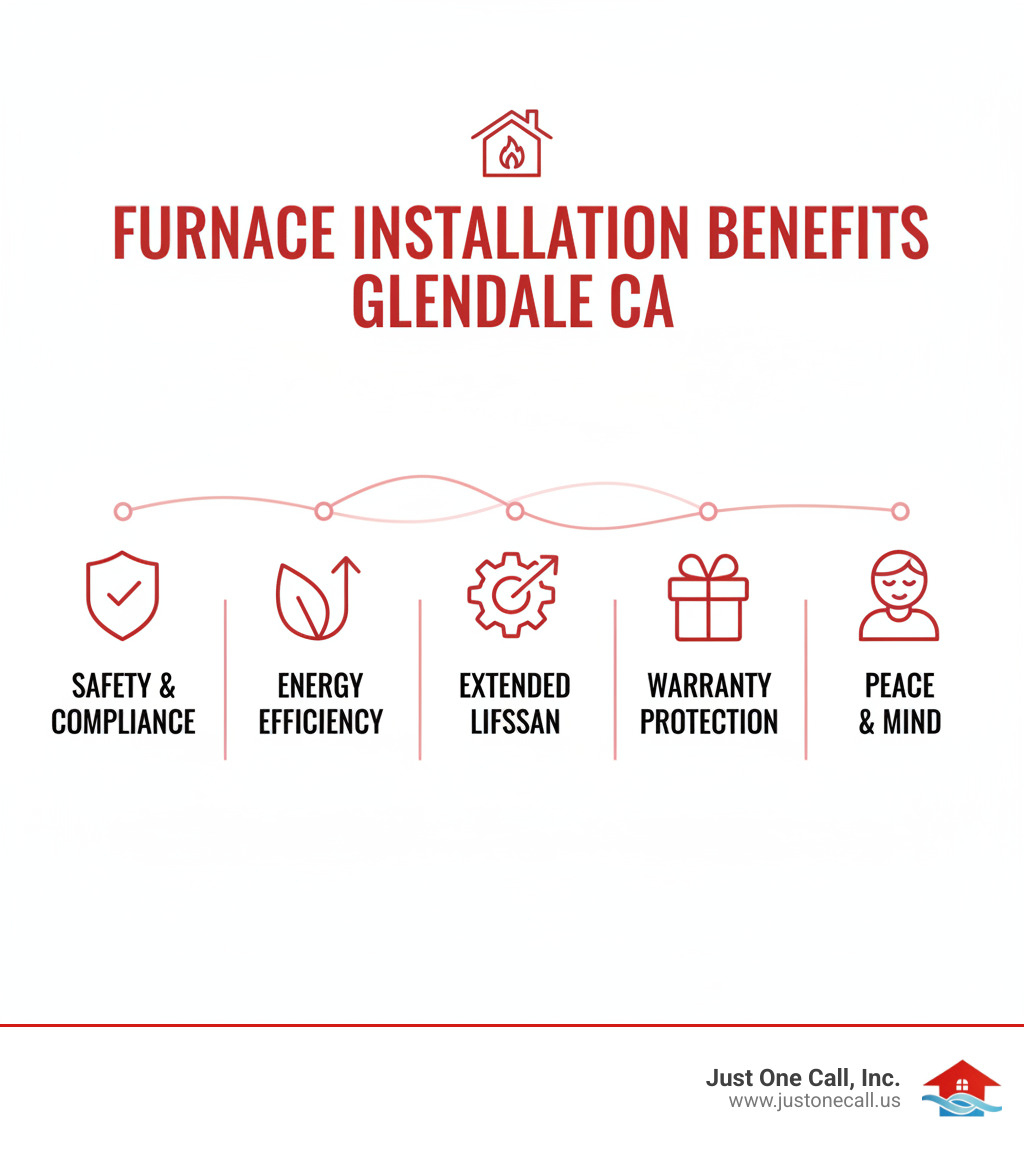
A professional installation is a comprehensive service that ensures your heating system performs at its peak, providing comfort, safety, and efficiency.
Safety and Peace of Mind: Certified technicians prevent hazards like carbon monoxide leaks and fires. Knowing your furnace is installed correctly means you don’t have to worry about hidden dangers.
Optimal Performance and Efficiency: A properly sized and calibrated furnace runs efficiently, providing consistent temperatures and lowering energy bills. This also reduces your home’s carbon footprint.
Longevity and Reliability: Correct installation extends your equipment’s life and ensures it operates smoothly when you need it most. You can learn more about how these systems work by watching this helpful video: How your furnace works.
Warranty Protection and Code Compliance: DIY installations often void manufacturer warranties. A professional ensures your system meets Glendale’s building codes, protecting your investment and your home.
Risks of Improper DIY Installation
Attempting a furnace installation without professional expertise carries significant risks. We strongly advise against it for these critical reasons:
Carbon Monoxide Leaks: Improperly vented furnaces can release this odorless, deadly gas, posing a severe health hazard.
Fire Hazards: Incorrect wiring or gas line connections can lead to electrical fires or gas explosions, endangering your home and family.
Voided Warranties: Most manufacturers require professional installation to keep the warranty valid, leaving you to cover the full cost of future repairs.
Poor Performance: An improperly installed furnace may heat unevenly and operate inefficiently, driving up energy bills.
Code Violations: DIY work often fails to meet Glendale’s strict building codes, which can lead to fines and safety issues. If you find yourself in a bind, remember we’re here for Emergency Furnace Repair Glendale CA.
Selecting the Perfect Furnace for Your Glendale Home
Choosing the right furnace for your Glendale home is a major decision, as it will keep your family comfortable for the next 15-20 years. When we help with furnace installation glendale ca, we focus on your home’s unique needs to find the perfect fit.
Key factors include:
Sizing (BTU): This is critical. A furnace that’s too small will struggle to heat your home, while one that’s too large will “short cycle,” wasting energy. We perform detailed calculations to find the right size.
Fuel Type: Most Glendale homes use natural gas, making gas furnaces a cost-effective and efficient choice. Electric options are also available for homes without gas lines.
Energy Efficiency (AFUE): The Annual Fuel Utilization Efficiency rating indicates how much fuel becomes heat. Modern furnaces with 90%+ AFUE ratings offer significant long-term savings.
Brand Reliability: We recommend manufacturers known for quality engineering and solid warranties to ensure your furnace performs reliably for years.
Home Layout: A sprawling ranch heats differently than a two-story home. We consider your home’s architecture to ensure even heating throughout.
If you’re dealing with an aging system, our Furnace Replacement Glendale CA team can help you upgrade to a more efficient and reliable model.
Common Types of Furnaces
For furnace installation glendale ca, you’ll encounter three main options suitable for our Southern California climate.
Furnace Type
Cost (Installation & Unit)
Efficiency
Climate Suitability
Gas Furnaces
$3,000-$6,000
80-98% AFUE
Excellent for Glendale’s mild winters; natural gas readily available
Electric Furnaces
$2,500-$5,000
95-100% efficiency
Good backup option; higher operating costs in our area
Heat Pumps
$4,000-$8,000
250-400% efficiency
Perfect for Glendale’s moderate climate; heats and cools
Gas Furnaces: The most popular choice in Glendale. They are economical to operate, efficient, and reliable, with modern units achieving AFUE ratings over 90%.
Electric Furnaces: These convert electricity to heat with nearly 100% efficiency. They are a good option for homes without gas service but typically have higher operating costs.
Heat Pumps: These versatile systems move heat rather than creating it, making them incredibly efficient for both heating and cooling in Glendale’s mild climate. Learn more with our Heat Pump Installation Glendale CA services.
Signs You Need a New Furnace
Your heating system often gives warning signs before it fails. Recognizing these can help you plan for a new furnace installation glendale ca and avoid an emergency.
Age: If your furnace is over 15-20 years old, it’s likely inefficient and prone to breakdowns.
Rising Energy Bills: A steady increase in heating costs often means your furnace is losing efficiency.
Frequent Repairs: If you’re calling for service every season, replacement may be more cost-effective than continued repairs. We can help with Furnace Repair Glendale CA.
Uneven Heating: Hot and cold spots suggest the furnace is struggling to distribute heat properly.
Strange Noises: Rattling, banging, or squealing sounds signal mechanical problems that could lead to failure.
Yellow Pilot Light: On a gas furnace, a yellow or flickering flame is a serious safety concern indicating potential carbon monoxide. This requires immediate attention.
Poor Air Quality: An increase in dust or strange odors can stem from an aging heating system.
Factors Influencing the Cost of Furnace Installation in Glendale CA
Understanding the costs of a furnace installation glendale ca helps you budget wisely. We provide transparent pricing based on these key factors:
Unit Price & AFUE Rating: A basic furnace costs less upfront than a high-efficiency model, but premium units pay for themselves through long-term energy savings.
Labor Costs & Home Size: This reflects the time and skill for a safe, code-compliant installation. Larger homes or complex layouts may require more labor.
Ductwork Modifications: Updating or repairing ducts may be necessary for your new furnace to perform optimally, which can add to the cost.
Permits: Glendale requires permits for safety and code compliance. These costs are typically included in a professional quote.
A new furnace is a significant investment. We offer flexible HVAC Financing Glendale CA options and can help you find available rebates to reduce your overall cost.
Your Guide to Professional Furnace Installation in Glendale CA
When you choose us for your furnace installation glendale ca, you’re choosing a partnership built on expertise and care. We’ve refined our process to ensure every installation is seamless, efficient, and custom to your home.
The Typical Installation Process
Understanding what to expect makes the experience more comfortable. Here’s how we guide you through the journey:
In-Home Consultation & System Selection: We start by assessing your current system, your home’s layout, and your comfort needs. Based on this, we recommend furnace options that balance efficiency, performance, and budget.
Scheduling: We work around your schedule to find an installation time that minimizes disruption to your routine.
Old Unit Removal: Our technicians arrive on time, protect your home with floor coverings, and safely disconnect and remove your old furnace.
Professional Installation: This is where our expertise shines. We precisely place the new unit and handle all ductwork, electrical, and gas line connections according to strict safety codes. For other services, visit our HVAC Installation Glendale CA page.
System Testing & Calibration: We thoroughly test heating cycles, airflow, and safety controls, calibrating the system for optimal performance and efficiency.
Final Walkthrough: We conclude by explaining your new system, demonstrating the thermostat, and providing maintenance tips so you feel confident from day one.
Post-Installation Maintenance and Care
Your new furnace installation glendale ca is the start of years of reliable comfort. Proper care protects your investment.
Regular Filter Changes: Check your filter monthly and replace it every 1-3 months. A clean filter improves airflow, boosts efficiency, and protects internal components.
Annual Professional Tune-Ups: Schedule a tune-up each fall to ensure safety and long-term performance. Our technicians clean components, inspect for wear, and catch small issues before they become costly repairs. Book your Furnace Tune-Up Glendale CA with us.
Keep Vents Clear: Ensure furniture, rugs, and drapes don’t block airflow, which forces your furnace to work harder.
Use a Programmable Thermostat: Automatically adjust temperatures to save energy when you’re away or asleep.
Finding the right contractor for your furnace installation glendale ca is key to ensuring your comfort and safety. Look for a skilled and trustworthy professional by verifying these credentials:
Licensing and Insurance: Always confirm your contractor is licensed to work in California and carries liability insurance. This is your protection against accidents.
NATE Certification: North American Technician Excellence (NATE) certification means technicians have proven their expertise through rigorous testing.
Local Experience: A contractor familiar with Glendale understands local climate challenges and building codes, ensuring a smoother process.
Positive Reviews: Check online reviews for consistent feedback on professionalism, quality work, and fair pricing from other local homeowners.
Written Estimates: A reputable contractor will provide a detailed written estimate breaking down all costs, including the unit, labor, and permits.
Warranties: Ask about warranties on both the equipment and the installation labor. A contractor who stands behind their work will offer comprehensive coverage.
During your consultation for a furnace installation glendale ca, asking the right questions can confirm a contractor’s expertise.
“Are you licensed and insured?” A legitimate contractor will readily provide their license number and proof of insurance.
“Are your technicians NATE-certified?” This confirms their commitment to industry best practices.
“What warranties do you offer on equipment and labor?” This protects your investment.
“Can you provide a detailed, written estimate?” This ensures transparency and no hidden costs.
“How long will the installation take?” An experienced contractor can provide a realistic timeframe.
“Will you handle all necessary permits and inspections?” A professional should manage the entire process, including local paperwork.
Pay attention to how they answer. Clear, confident communication is a sign of a knowledgeable professional you can trust in your home.
Frequently Asked Questions about Furnace Installation
Homeowners often have questions about furnace installation glendale ca. Here are answers to the most common ones.
How long does a furnace installation typically take?
A straightforward furnace installation glendale ca usually takes 4 to 8 hours. The timeline can be longer if the project involves complex work like ductwork modifications or converting from an electric to a gas system. We provide a clear timeline during your initial consultation.
Do I need a permit for furnace installation in Glendale, CA?
Yes, a permit is required for almost every furnace installation in Glendale. This ensures the work meets local building and safety codes, protecting your family. A reputable contractor like Just One Call, Inc. will handle all the necessary permits and inspections for you as part of the installation process.
What is a good AFUE rating for a new furnace?
For Glendale’s moderate climate, a furnace with an AFUE rating of 90% or higher is an excellent choice. AFUE (Annual Fuel Utilization Efficiency) measures how efficiently the furnace converts fuel to heat. A 90%+ AFUE unit offers a great balance of upfront cost and long-term energy savings, which is ideal for our milder winters.
Stay Warm and Worry-Free This Winter
Investing in a new, professional furnace installation glendale ca is a major step toward ensuring your family’s comfort and safety. An energy-efficient furnace keeps you cozy, lowers utility bills, and provides peace of mind for years to come.
Proper maintenance, like regular filter changes and annual tune-ups, is the key to protecting your investment and ensuring your furnace lasts for its full 15-20 year lifespan.
At Just One Call, Inc., we’re more than just installers; we’re your partners in home comfort. We are committed to providing a smooth, professional, and honest experience, from the initial consultation to the final walkthrough. Our goal is to deliver the efficient service that transforms your house into the warm home you deserve.
Don’t let another chilly evening remind you that your old furnace isn’t up to the task. Schedule your heating service today! and find why so many Glendale homeowners trust us to keep their families comfortable with just one call.
When Your Glendale Furnace Goes Silent: Quick Fixes That Actually Work
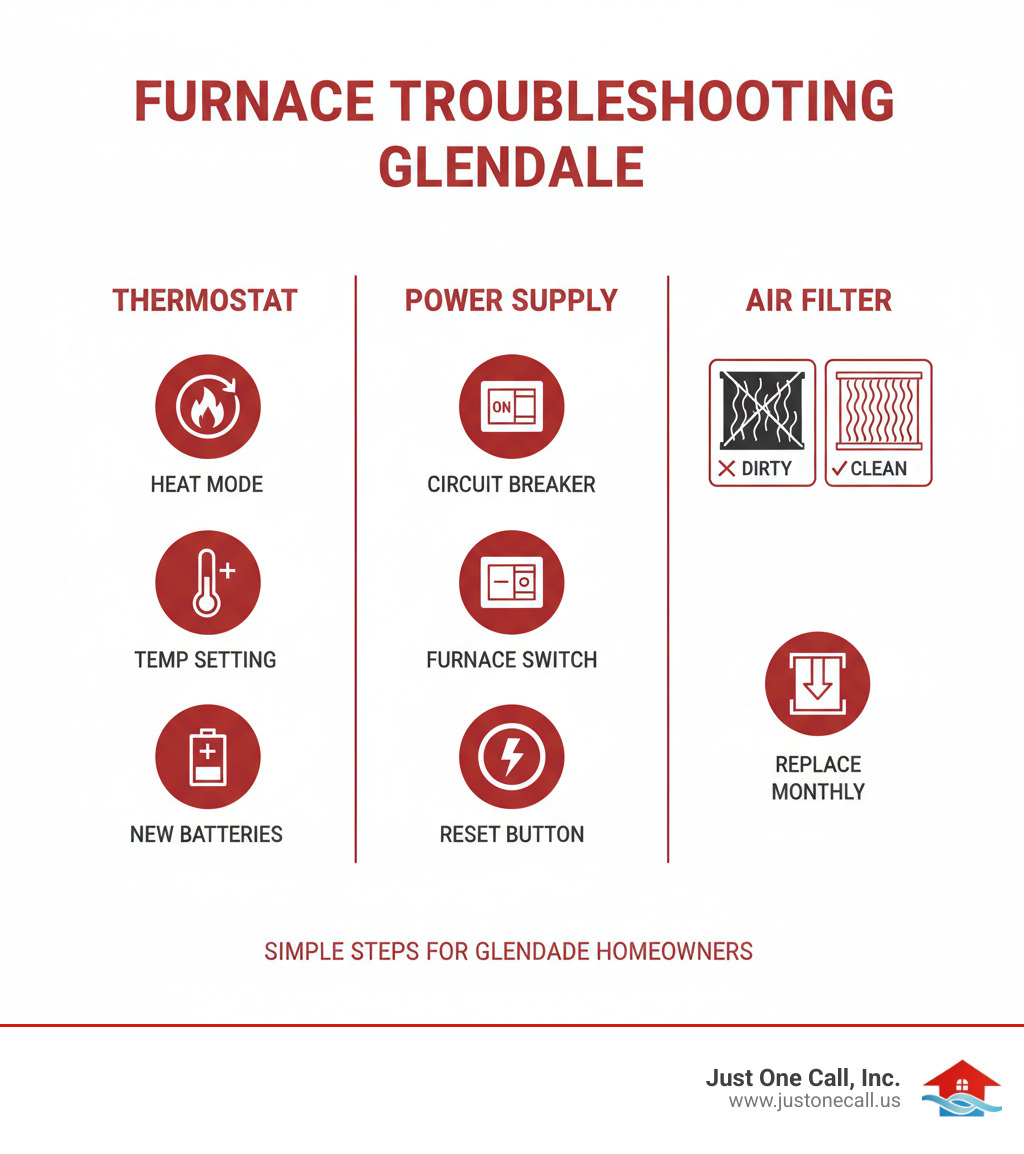
Furnace troubleshooting glendale homeowners need starts with three simple checks that solve 80% of heating problems. Having your furnace suddenly stop working during a Glendale evening can be frustrating, especially when temperatures start to drop into the 40s and 50s.
Most common furnace fixes you can try right now:
Thermostat Check – Verify it’s set to “heat” mode and 5 degrees above room temperature
Power Supply – Look for tripped breakers labeled “furnace” or “HVAC”
Air Filter – Replace if you can’t see light through it
Gas Supply – Ensure the gas valve handle runs parallel to the pipe
Reset Button – Press the furnace reset button near the motor
While Arizona is known for its heat, HVAC systems in Arizona typically last only 12-15 years due to extreme temperature swings and desert dust – shorter than the national average of 15-20 years. This means Glendale homeowners face more frequent furnace issues.
When temperatures dip into the 50s and 40s, a broken furnace can jeopardize the health of those with compromised immune systems. Many furnace problems have simple solutions, but some warning signs demand immediate professional attention for safety reasons.
The good news? A tripped breaker or clogged air filter – two of the most common causes – can be fixed in minutes. More complex issues like gas leaks, strange burning smells, or grinding noises require professional diagnosis to prevent safety hazards.
First-Response Furnace Fixes: What to Check Before You Call
Before calling for help when your furnace stops, many problems have simple solutions. These quick checks, which solve about 80% of furnace issues, can often restore your heat in minutes and are safe for any homeowner to perform.
Check Your Thermostat
More than half of “broken” furnaces are just thermostat mix-ups. First, ensure it’s set to “Heat” mode and the temperature is at least 5 degrees above the current room temperature. This simple oversight is surprisingly common.
Also, check for dead batteries; a dim or blank display is a key sign. Even hardwired thermostats often have backup batteries that need replacing. For smart thermostats, verify it’s not in vacation mode or following an old schedule. On older models, you can check for loose wires if you’re comfortable and gently clean any dust buildup with a soft brush.
Need more detailed guidance? Check out our comprehensive HVAC troubleshooting resource.
Verify the Power Supply
Even gas furnaces need electricity for the blower, ignition, and controls. Electrical issues cause about 40% of heating equipment breakdowns. Check your electrical panel for a tripped breaker labeled “furnace” or “HVAC.” To reset it, flip it firmly to “off” first, then back to “on.”
Also, look for the furnace power switch, often a standard light switch on or near the unit, which can be accidentally turned off. Some furnaces have a reset button near the blower motor; press it once if the system stopped mid-cycle. If it doesn’t work, wait 30 minutes before trying again, as it may be in a safety lockout.
Safety first: Stop and call a professional if you smell gas, see sparks, or are unsure about any electrical work.
Inspect the Air Filter
A dirty air filter is a top reason for furnace shutdowns. Restricted airflow makes the furnace overheat and shut off for safety.
To check, turn off the furnace, find the filter compartment (usually near the return air duct), and pull out the filter. If you can’t see light through it, it needs replacing. This is crucial in Glendale, where desert dust clogs filters quickly. Check your filter monthly and replace it every one to three months—more often if you have pets or allergies. A clean filter not only prevents shutdowns but also lowers energy bills and improves air quality.
For more tips on keeping your furnace running smoothly year-round, visit our furnace maintenance page.
Your Guide to Furnace Troubleshooting in Glendale
Once you’ve checked the basics, you might encounter more complex issues. This section details common furnace problems and helps you decide when a problem is beyond a simple DIY fix for furnace troubleshooting glendale.
Common Furnace Problems and DIY Furnace Troubleshooting in Glendale
Even after checking the thermostat, power, and filter, your furnace might still be acting up. Here are a few more things you can investigate.
For older gas furnaces, check if the pilot light is out. Instructions for relighting it are usually on the unit. If it won’t stay lit, the thermocouple (a safety sensor) is likely faulty and needs professional service.
Modern furnaces have electronic igniters. If you hear clicking but get no flame, the igniter may be dirty or failing. These parts are fragile, so professional flame sensor cleaning (typically $130-$400) is recommended to avoid costly damage.
Check that all heating vents are open and unobstructed by furniture or rugs. A simple blockage can make your furnace work too hard.
For gas furnaces, ensure the gas supply valve handle is parallel to the pipe (the open position). If you suspect other gas supply issues or smell gas, evacuate immediately and call 911 and your gas company.
High-efficiency furnaces have a condensate line that can clog with dust, triggering a shutdown. If you see water pooling near your furnace, turn off the power. You can try clearing the line with a wet/dry vac, but call a professional if you’re unsure, as leaks can also signal a dangerous cracked heat exchanger.
Warning Signs That Demand a Professional
While some furnace issues are DIY-friendly, others require expert help. Ignoring these can lead to costlier repairs or dangerous situations.
Strange noises like banging, grinding, or squealing point to mechanical problems like a failing blower motor, loose components, or a worn belt that need professional attention.
Unusual smells are a key indicator. A light burning dust smell is normal at the start of the season. However, a persistent burning or metallic smell suggests an electrical problem or overheating motor. The most critical warning is a rotten egg or sulfur odor, which indicates a gas leak. Evacuate your home immediately, do not use any electronics, and call 911 and your gas company from a safe location.
Inconsistent heating, such as some rooms staying cold, or climbing energy bills suggest your system is struggling with airflow or failing components. For older units, a pilot flame that is yellow instead of blue indicates combustion problems that need professional assessment.
When to Call for Professional Furnace Troubleshooting in Glendale
You’ve tried the basic fixes, but your furnace still isn’t cooperating. Here’s when to call for professional furnace troubleshooting glendale services.
Furnace short cycling (turning on and off frequently) wastes energy and can indicate serious problems like a dirty flame sensor or failing heat exchanger.
If your blower runs constantly, even when the furnace isn’t heating, you may have a faulty limit switch or other internal electrical problems.
When your furnace shows no signs of life after you’ve checked the thermostat, power, and filter, you’re likely dealing with an internal part failure that requires professional diagnosis.
Safety concerns require an immediate call. This includes any persistent burning smells, metallic odors, or a rotten egg smell (gas leak). If you suspect carbon monoxide exposure (symptoms include headaches, dizziness, or nausea), evacuate immediately and call emergency services.
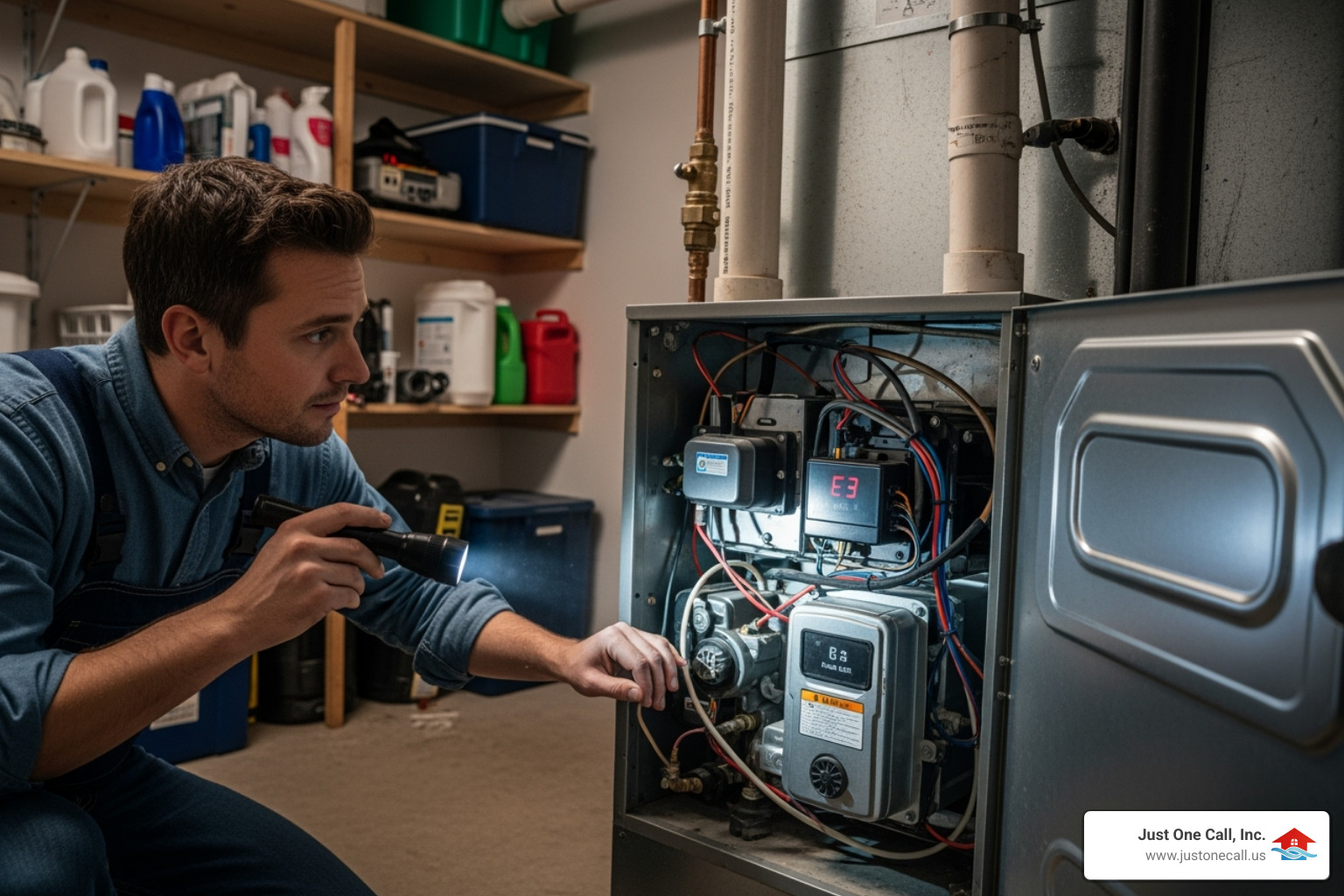
Modern furnaces often display diagnostic codes via flashing lights. While you can look them up, resolving these codes typically requires specialized knowledge and tools.
Don’t hesitate to contact us for emergency furnace repair if you’re experiencing any of these critical issues.
Glendale-Specific Furnace Considerations: Repair, Replace, and Costs
Living in Glendale brings unique challenges for heating systems. Our desert climate puts special demands on furnaces, affecting maintenance and replacement timing. Understanding these local factors helps you make smarter decisions about furnace troubleshooting glendale.
How Glendale’s Climate Affects Your Furnace
Glendale’s climate is tougher on furnaces than many realize. Chilly nights require a reliable furnace, but extreme temperature swings cause parts to expand and contract, leading to stress and failure. Desert dust is another major issue, clogging air filters rapidly and forcing the furnace to overwork, which causes overheating and premature wear.
These harsh conditions shorten the typical HVAC lifespan in Arizona to 12-15 years, compared to the 15-20 year national average. This means regular professional maintenance is essential, not just recommended, for Glendale homeowners.
Repair vs. Replace: Making the Smart Choice
Deciding whether to repair or replace your furnace involves several factors.
Age: Repairs are usually best for units under 10 years old, while replacement is often wise for those over 15, especially given Arizona’s shorter HVAC lifespans.
The 50% Rule: If a repair costs half as much as a new unit, replacement is the better investment.
Energy Efficiency: Modern furnaces have AFUE ratings of 95%+, while older ones may be only 60-70% efficient. You can explore potential savings with high-efficiency equipment by checking out Carrier’s energy savings resources.
Safety: A cracked heat exchanger or frequent breakdowns warrant replacement.
Common replacement options in Glendale include gas furnaces, electric furnaces, and heat pumps. For detailed information about gas furnace options, AirConditioner.com’s heater section offers comprehensive comparisons.
Understanding Furnace Repair Costs in Glendale
Understanding furnace repair costs in Glendale helps you budget. Most common repairs, like fixing thermostats or cleaning flame sensors, range from $130-$400. Costs vary based on the part needed and labor complexity.
Thermostat issues: $75-$300
Flame sensor cleaning: $130-$200
Igniter replacement: $200-$400
Blower motor problems: $400-$1,000+
Heat exchanger replacement: Often exceeds $1,000, making furnace replacement a more common choice, especially on older units.
We provide clear, upfront estimates before any work begins, ensuring no surprises.
Frequently Asked Questions about Furnace Problems
As Glendale’s trusted heating specialists, we hear the same concerns from homeowners time and time again. Let’s tackle the most common questions about furnace troubleshooting glendale residents ask us.
How often should my furnace be serviced in Glendale?
Annual professional maintenance is essential for Glendale furnaces, ideally scheduled in the fall before it gets cold. A tune-up ensures peak efficiency (lowering energy bills), extends your system’s lifespan in our harsh climate, and includes critical safety checks for gas leaks and carbon monoxide risks. Plus, most manufacturers require annual service to keep your warranty valid.
Our comprehensive furnace inspection services are specifically designed to address Glendale’s unique climate challenges and keep your system running smoothly year after year.
What are the most common types of furnaces in Glendale homes?
Glendale homes feature a mix of heating systems. Gas furnaces are common in older homes, providing powerful heat but often with lower efficiency. Electric furnaces are found where gas lines are unavailable and are reliable but can be more expensive to run. Heat pumps are increasingly popular for new installations, offering efficient heating and cooling in one unit, perfect for our climate. Our technicians are trained to service everything from older models to modern high-efficiency units.
Can I perform furnace repairs myself to save money?
While some DIY tasks are encouraged, others are best left to professionals. You can safely change air filters, check thermostat settings, and reset circuit breakers. These steps can solve many common problems and save you a service call.
Avoid DIY repairs involving gas lines, complex electrical work, or internal components. Attempting these can be dangerous, cause more damage, and void your warranty. A professional can diagnose underlying issues that a simple part replacement might miss. When in doubt, call us. We can help you determine if it’s a safe DIY fix or if you need an expert for professional furnace troubleshooting glendale services.
Get Your Heat Back with Confidence
When your furnace stops working on a chilly Glendale evening, it can feel overwhelming. But here’s the good news: most furnace problems have simple solutions. By working through the basic furnace troubleshooting glendale steps we’ve covered – checking your thermostat settings, verifying the power supply, and inspecting that air filter – you can often restore warmth to your home in just minutes.
Your safety always comes first. While changing a filter or flipping a breaker is perfectly safe, never ignore warning signs like persistent burning smells, grinding noises, or the unmistakable rotten egg odor that signals a gas leak. These aren’t DIY moments – they’re clear signals to step back and call for professional help.
The reality is that some furnace issues need an experienced eye. A professional diagnosis isn’t just about getting your heat back – it’s about ensuring your family’s safety. Our trained technicians can spot problems that might not be obvious to homeowners, from hairline cracks in heat exchangers to subtle signs of carbon monoxide risks.
At Just One Call, Inc., we’ve built our reputation on being there when Glendale families need us most. Our experienced technicians understand both the common quirks of desert heating systems and the unique challenges that Arizona’s climate throws at your furnace. We believe in honest assessments, transparent pricing, and getting your home comfortable again without any runaround.
Don’t let a stubborn furnace turn your cozy evening into a cold, stressful night. Whether it’s a simple fix or something more complex, we’re ready to restore warmth and peace of mind to your home.
Hot water is something most homeowners in Van Nuys depend on every day, whether it’s for showers, dishwashing, or laundry. When it suddenly stops working, it can throw off your routine and make even simple tasks frustrating. Tankless water heaters are popular in many Van Nuys homes for their energy efficiency and compact design. But like any system, they can run into problems, and the most noticeable one is a complete lack of hot water.
If your tankless water heater is no longer producing hot water, you’re not alone. This issue is more common than you might think, especially when systems aren’t maintained or installed properly. It may stem from something simple, but it can also point to a more serious problem that requires attention. Knowing how to identify the cause of the issue fast is the first step to getting things working again.
Common Causes Of No Hot Water In Tankless Systems
Your tankless water heater has a few different components that must work together for it to provide a steady flow of hot water. When something breaks down or is disconnected, hot water can suddenly stop. These are the most common areas where problems tend to show up:
1. Disrupted Gas or Electrical Supply
Tankless systems run on gas or electricity, depending on the model. If there is no power or the gas line is interrupted, the unit cannot do its job. A tripped breaker, a blown fuse, or a gas valve that has accidentally been turned off can all lead to a loss of hot water. Always start by checking if your home has power to the unit or if your gas service is active.
2. Faulty Components Inside the Unit
Over time, internal parts may wear out or malfunction. A failed ignition system, defective sensors, or a blocked heat exchanger can cause the heater to stop producing hot water. These problems are not usually visible to the average person. Attempting to fix these issues without proper training can lead to further damage.
3. Installation or External Factors
In some cases, the problem may trace back to how the system was installed. Tankless water heaters need to be sized properly and vented correctly. If not, they might overheat, shut down, or fail to start. Environmental factors like poor air ventilation or debris buildup around the intake can also affect how well the unit operates.
A common example is a homeowner in Van Nuys who had not cleaned the filters in several months. Dust buildup caused the system to overheat and shut off completely. Once the filters were cleaned, the system started producing hot water again. Not all problems are that easy to fix, though.
DIY Troubleshooting Steps To Try First
Before jumping to conclusions or assuming the system is broken, there are a few safe and easy steps to try. These may help you identify the issue or at least rule out basic problems:
– Check Power or Gas Supply
– Make sure the breaker connected to your unit has not tripped.
– If it is gas-powered, confirm the gas line valve is open and gas is flowing.
– Inspect and Clean Filters
– Locate and remove the inlet filter, usually found near the unit’s intake.
– Rinse with water to clear any buildup of dirt or debris.
– Reset the Unit
– Press the reset button on your unit, usually located on the control panel.
– Refer to the manual for any error codes displayed. These codes can point to the cause of the problem.
– Check Water Supply
– Ensure that incoming cold water is not being restricted due to a closed valve or plumbing issue.
These basic steps can often correct minor problems. If you have gone through the list and there is still no hot water, it is time to seek help from our professionals. Continuing to test or disassemble the unit without proper knowledge can lead to more damage or even personal injury.
When To Contact Our Professionals
If your tankless water heater still does not produce hot water after following the basic steps above, you should reach out to our trained professionals. Some signs that your system needs a deeper inspection include:
– The unit repeatedly shuts down after starting
– Unusual noises during operation
– Visible error codes that do not clear with a reset
– Water temperature fluctuates without warning
– A lack of hot water even when demand is low
Trying to repair complex issues such as a faulty ignition system, internal circuit board errors, or a damaged heat exchanger can make the situation worse without the right experience. You might damage the equipment, void your warranty, or create serious safety risks like gas leaks. Our professionals are equipped with the necessary tools and expertise to quickly identify and resolve such issues.
If your unit has not been serviced in over a year, there might be hidden buildup or worn parts that contribute to the problem. Our technicians can inspect and restore function before more severe breakdowns occur. Taking action early may help you avoid higher costs later.
Preventative Measures To Maintain Your Tankless Water Heater
While it is not always possible to foresee a breakdown, steady maintenance can help reduce the chances of sudden failures. You do not need advanced knowledge for basic care. A few consistent habits can go a long way.
Here are some practical tips to help keep your system running smoothly:
– Schedule a yearly inspection with our technicians to catch wear before it causes failure
– Flush the system periodically to remove mineral scale buildup, especially in areas with hard water
– Clean filters and air intakes on a regular basis to prevent clogging
– Inspect the exhaust and intake vents for blockages or disconnections
– Keep the area around the unit clear of dust and debris to allow proper airflow
Watch for changes in how your system runs daily. Inconsistent water temperature, lower pressure, or frequent resets can indicate early problems. Responding to these signs quickly can help avoid a complete shutdown.
Proper upkeep supports consistent performance and lowers the chance of needing unexpected repairs. Routine maintenance also helps extend the useful life of your tankless water heater.
Restoring Comfort With Reliable Hot Water
A tankless water heater failure is frustrating, but that does not mean it has to disrupt your entire day. Knowing how your system works and the early signs of trouble gives you an advantage. Acting fast increases the likelihood of a simple fix and protects your home from larger plumbing problems.
In Van Nuys homes, hot water is needed throughout the day. From early morning showers to evening chores like washing dishes or doing laundry, a reliable water heater keeps your routine on track. With consistent care and timely assistance from our professionals, your tankless system can serve you well for years without interruption. Regular attention and prompt service calls are the best way to avoid unexpected disruptions in the future.
If you’re dealing with inconsistent or no hot water, Just One Call, Inc. is here to provide dependable solutions for your tankless water heaters in Van Nuys, restoring comfort to your home quickly and safely. For a quick estimate or to book a service visit, please contact us today.
Tankless water heaters are common in many Sherman Oaks homes thanks to their energy efficiency and steady hot water supply. But when that normally quiet system starts making unexpected noises, it can interrupt your routine. A humming, banging, or rattling water heater is more than just distracting—it can be a sign that something is going wrong inside the unit.
These sounds usually don’t mean your system is beyond repair, but they shouldn’t be ignored either. Noises can point to small issues that, if left untreated, can grow into serious problems. Knowing what these sounds mean and where they might be coming from can help you stay ahead of major repairs and keep your tankless water heater working like it should.
Common Causes of Unusual Noises in Tankless Water Heaters
Every mechanical system makes some sound during operation, but persistent or loud noises coming from your water heater often indicate a deeper problem. If you’re noticing strange sounds in your Sherman Oaks home, the following issues could be the reason:
1. Mineral Buildup
Many homes in Sherman Oaks deal with hard water. As this water runs through your tankless heater, minerals like magnesium and calcium collect inside the system. Over time, those minerals harden into scale and build up on the heating elements or inside the pipes. This buildup can result in popping, crackling, or gurgling noises, especially when the system first heats up.
2. Air in the System
Small amounts of air in the pipes are usually harmless. But during maintenance, new installations, or due to leaks in the valves or joints, air can get trapped in the system. This air can move through the unit and create vibrating or clicking sounds. If this is left unaddressed, it can disrupt water flow and cause other performance problems.
3. Water Pressure Issues
If the pressure of the water coming into or moving through your system fluctuates a lot, it could be stressing out the components inside your tankless heater. This stress creates odd noises like whining or rattling. Long-term water pressure inconsistencies can eventually cause wear or even damage to key parts of the unit.
Being familiar with these causes can help you respond sooner and avoid larger problems that could lead to costly repairs or system failure.
Potential Problems Associated with Ignoring These Noises
Strange noises won’t go away on their own. Waiting too long to address the sounds you hear can turn a minor problem into something much more serious.
Here’s what can happen if the issue goes unresolved:
– Increased Wear and Tear
When the internal parts of your tankless water heater experience ongoing stress—from scale buildup, pressure issues, or blockages—they start to wear down faster. That means your system has to work harder to deliver hot water, which leads to more mechanical strain and shortens overall unit lifespan.
– Reduced Efficiency
A struggling water heater uses more energy to do the same job. Buildup around important components like the heat exchanger causes the system to run longer and harder. Homeowners may notice they’re using more energy and still not getting consistent hot water when they want it.
– Potential for System Failure
Small issues become big ones over time. A clogged valve or restricted water pipe can put extra pressure on other parts of the unit. This chain reaction can eventually cause full system breakdown. At that point, what started as a noise issue could require complete replacement—a much more expensive and time-consuming fix.
It’s far easier and more cost-effective to catch these problems early by paying attention to the clues your system is giving you.
Steps to Diagnose the Source of the Noise
Before assuming the worst, take a few minutes to gather helpful information about what you’re hearing. For homeowners in Sherman Oaks, this early assessment allows for a faster and more accurate solution once our professionals arrive.
Start by listening to the sound.
– What kind of sound is it? A sharp pop, a low hum, a high-pitched whistle?
– When does it happen? Right when you turn on the hot water? After several minutes of use? At random times?
– How often does it happen? Every time the system activates or only once in a while?
Next, visually inspect the system. You may not understand the internal workings of your tankless water heater, but it’s easy to observe the outside. Look for:
– Water leaks
– Loose or corroded fittings
– Error codes on the control panel
– Discoloration, rust, or burned areas near wires or venting components
You can also check your unit’s owner manual for guidance. Many manufacturers include codes, charts, or sound descriptions to help identify problems. If needed, record a short video or audio clip of the sound—something you can show to our technicians at your next appointment. These small steps can help shave time off diagnostics and shorten the path to repair.
When to Contact Our Professionals for Help
Some noise is normal during operation, but continued or loud sounds aren’t. If the noise grows, becomes more frequent, or is paired with other warning signs like no hot water, it’s time to bring in our team.
Contact our professionals right away if you notice:
– Loud banging, knocking, or metallic clanging coming from the unit
– The smell of gas or scorching around the heater
– The system constantly turning on and off (known as short cycling)
– Lack of hot water at the taps or inconsistent heat output
– Visible rust, mineral buildup, or leaks at any connections
Our professionals are trained to identify problems that extend beyond visible wear. Whether it’s an air blockage, pressure control issue, or an electrical problem inside the controls, our technicians can safely and accurately locate the problem. In many cases, fixing the sound issue restores overall efficiency, improves water consistency, and extends the unit’s life.
Keeping Your Sherman Oaks Home Comfortable with Proper Water Heater Maintenance
After your tankless water heater has been repaired or serviced, staying proactive about maintenance is key. Simple issues become much less likely with regular inspections and timely system flushes. Keeping your water heater quiet also means keeping it efficient, safe, and reliable.
Homeowners in Sherman Oaks can benefit from regular service that includes:
– Flushing the system to remove mineral buildup
– Testing water pressure and adjusting it if needed
– Checking valves and sensors for signs of early wear
– Replacing filters and vents where necessary
– Inspecting for corrosion or small leaks before they cause serious problems
For example, a Sherman Oaks homeowner had been hearing tapping noises for months and ignored them until the hot water began cutting out. After an inspection, we found severe scale buildup that clogged the flow sensor. A full flush and a few part replacements returned the system to normal—no noise, steady hot water. That homeowner now books preventive maintenance every year, avoiding future issues before they begin.
Strange sounds from your tankless water heater often provide early warnings of internal stress or blockages. Paying attention to the noise, gathering clues, and calling for help when needed will keep your water heater serving your home’s needs without interruption. Regular maintenance, especially in areas with hard water like Sherman Oaks, helps reduce unexpected noises while improving system performance.
Keep your hot water system running smoothly by addressing unusual noises early. Trust Just One Call, Inc. to help ensure your tankless water heaters in Sherman Oaks remain efficient and secure. For a quick estimate or to book a service visit, please contact us today.
Tankless water heaters have become a popular choice among homeowners in Glendale, and it’s easy to understand why. Unlike traditional water heaters, these units heat water on demand, offering energy efficiency and continuous hot water supply. With the convenience of saving space and up to 30% in energy use, they make a compelling option for modern households. However, like all home systems, tankless water heaters require regular upkeep to function seamlessly and avoid potential issues.
One common problem that homeowners face is scale buildup within their tankless water heaters. This issue not only affects the performance of the unit but also reduces its lifespan. Scale buildup happens when minerals present in the water, like calcium and magnesium, accumulate inside the heater. Over time, this buildup can obstruct water flow, diminishing the efficiency of the heater and leading to more significant repairs. Understanding how to prevent scale buildup is crucial for maintaining a functional and efficient water system in your home.
Understanding Scale Buildup
Scale buildup is a common concern for those with tankless water heaters, especially in areas with hard water. Hard water contains higher concentrations of minerals, such as calcium and magnesium, that can accumulate within the tankless system. This accumulation forms a layer of deposit, often referred to as scale, which can impede water flow and affect the heat exchanger’s performance. Over time, if left unchecked, these deposits can lead to decreased efficiency and even damage to the heater’s components.
Signs of scale buildup are relatively easy to identify. Watch for a reduction in water pressure, fluctuating water temperatures, or an increase in the time it takes for the water to heat. Additionally, if your utility bills are higher than usual, it might be due to your heater working harder to compensate for the reduced efficiency caused by scale deposits. Noticing these signs early can prompt timely intervention to prevent more serious problems down the line.
Preventative Measures for Scale Buildup
To keep your tankless water heater working efficiently, implementing preventative measures against scale buildup is important. Regular maintenance is the first line of defense. Here are some helpful steps:
– Schedule routine flushing of the tankless water heater. Flushing helps to remove mineral deposits before they harden and accumulate.
– Adopt a regular cleaning schedule to keep the system free of scale and running optimally.
– Use water softeners, particularly in hard water areas, to decrease the presence of scale-causing minerals in your water supply.
By following these preventative measures, homeowners in Glendale can ensure their tankless water heaters remain in peak condition, offering uninterrupted access to hot water and efficient energy use. Regular interaction with your water heater system, such as inspections and cleanings, is essential to maintaining a hassle-free and efficient home.
Professional Inspection and Maintenance
Though regular maintenance can address some scale issues, having our professionals inspect your tankless water heater offers additional benefits. A professional inspection ensures that your unit runs at peak performance by identifying and resolving potential problems before they escalate. During a professional visit, technicians will thoroughly examine the system for any signs of wear or damage and check for scale deposits that might not be visible during routine homeowner checks.
Here’s what to expect during a professional maintenance visit:
– Comprehensive Inspection: Technicians will look for any signs of scale buildup, leaks, or other issues. – System Flushing: They will perform a thorough flush to clear out any accumulated minerals, which is especially important in hard water areas. – Component Check: Each part of the system, including the heat exchanger, filters, and inlets, will be examined and cleaned. – Efficiency Testing: Technicians will ensure that the water heater is operating efficiently, which can help lower energy costs.
It’s a wise investment for homeowners in Glendale, where hard water is common, to schedule these inspections regularly to maintain optimal performance and extend the lifespan of the heater.
Ensuring Longevity and Efficiency
Long-lasting and efficient operation is the goal for every tankless water heater. Apart from routine maintenance and inspections, there are additional steps homeowners can take to ensure their units function optimally. The benefits of these practices extend beyond just cost savings on energy bills, contributing to the overall reliability of the system.
– Regular Flushing: Make sure to flush the system every six months to a year, depending on water hardness. This prevents scale from impacting performance. – Install a Water Softener: For areas with particularly hard water, a water softener can greatly diminish scale formation, protecting your heater. – Monitor for Issues: Stay vigilant for any signs of scale buildup or performance issues and address them promptly.
By actively engaging in these practices, tankless water heaters can operate more efficiently, delivering consistent hot water and reducing the chances of expensive repairs.
Keeping Your Tankless Water Heater in Top Condition
Preventing scale buildup is a vital part of maintaining your tankless water heater in Glendale. By understanding the issue and implementing regular maintenance strategies, homeowners can ensure their systems work efficiently for years to come. Professional inspections support these efforts, offering a deeper level of care that can catch problems early.
Regular attention to your system not only preserves its functionality and efficiency but also prolongs its lifespan. Taking these steps helps guard against the interferences that scale can cause, ensuring unwavering hot water supply and cost-effective operation. Seeking professional assistance for regular check-ups can make a significant difference in maintaining the longevity and efficiency of your tankless water heater.
If you want to reduce scale buildup issues and keep your system running smoothly in Glendale, consider regular maintenance for your tankless water heaters in Glendale and schedule a checkup with our professionals. A well-maintained unit improves performance and efficiency. For a quick estimate or to book a service visit, please contact us today.
Taking care of your tankless water heater is key to ensuring it runs smoothly for years to come. With Glendale’s fluctuating demand for hot water, homeowners need to maximize the lifespan of their heating systems. A well-maintained tankless water heater not only offers warmth and comfort but also goes a long way in reducing energy bills, providing efficient service without unexpected breakdowns.
By understanding how to properly maintain and use your tankless water heater, you can prolong its life and enjoy consistent performance. This article will guide you through some of the best practices, helping you protect your investment while enjoying a reliable hot water supply throughout the year.
Regular Maintenance Tips
Regular maintenance is essential for keeping your tankless water heater in top condition. Here are some routine tasks you should consider:
– Descaling the System: Over time, mineral buildup can occur, especially in areas with hard water, like Glendale. Descaling helps prevent these deposits from affecting your heater’s performance. – Flushing the Heater: Regular flushing removes sediment and mineral deposits, ensuring efficient operation. Aim to flush your system at least once a year to help maintain flow efficiency. – Checking the Filter: Clean or replace intake filters periodically to avoid clogs and ensure proper air and water flow in your unit.
Homeowners should follow a simple maintenance schedule. For instance, consider a quarterly check of the filters, semi-annual inspections for unusual noises or performance dips, and annual deep cleanings to keep everything running smoothly.
Proper Usage Practices
To get the most out of your tankless water heater, it’s important to use it wisely. Set the temperature to a moderate level, avoiding extremes that can overstress the system. Keeping the temperature at a consistent setting also helps save energy, reducing wear and tear on the unit.
Additionally, it’s beneficial to avoid overloading the system. Ensure you’re not using several hot water outlets at the same time, which can lead to system strain. For example, running the dishwasher, taking showers, and doing laundry simultaneously may push the heater beyond its limits.
By adopting these usage practices, you can significantly enhance the lifespan and efficiency of your tankless water heater.
Recognizing and Addressing Common Issues
Even with regular maintenance, tankless water heaters may still encounter issues that can affect performance if not addressed promptly. Awareness of these problems can help you intervene before they require costly repairs. Common symptoms include fluctuating water temperatures, reduced water flow, and even error messages on the unit.
To tackle these issues:
– Fluctuating Water Temperatures: This can often be due to mineral buildup or a problem with the thermostat. Start by checking and cleaning the intake filter and performing a thorough descaling. If problems persist, it might be time to call in our professionals. – Reduced Water Flow: This may be caused by a blocked inlet screen or a clogged vent. Cleaning these components can often resolve the issue. – Error Codes: Modern tankless water heaters are equipped with error detection. If a code appears, consult the user manual to determine the issue and consider professional help for any complex repairs.
By addressing minor issues early, you can prevent more significant problems from developing, maintaining the efficiency of your unit.
Benefits of Professional Inspections
Regular professional inspections play a critical role in extending the life of your tankless water heater. Our technicians have the expertise to spot potential issues that might be overlooked by homeowners.
During an inspection, technicians will:
– Examine and clean components not easily accessible to homeowners.
– Check for signs of wear or damage that could lead to larger issues.
– Fine-tune the operational settings to ensure optimal efficiency and performance.
Annual inspections provide peace of mind, knowing that the heater is functioning as it should. They also help identify any necessary repairs or upgrades, which can prevent unexpected breakdowns or inefficiency.
Keep Your Tankless Water Heater in Top Condition
Caring for your tankless water heater involves regular maintenance, conscious usage, and addressing issues promptly. By combining these practices, you secure a long and efficient life for your heater. Investing time in preventive measures not only saves money but also ensures that you have a reliable source of hot water.
Maintaining your tankless water heater in Glendale is straightforward when you establish a routine and stay proactive. Through consistent care and professional support when needed, your heater will serve you well, providing consistent comfort and energy savings for years. Prioritize these strategies to enjoy your tankless water heater at its best.
Ready to secure the performance of your heating system in Glendale? Learn more about tankless water heaters in Glendale to find out how regular upkeep can extend your unit’s efficiency and reliability. Just One Call, Inc. has a strong track record of helping homes maintain consistent comfort, and for a quick estimate or to book a service visit, please contact us today.
A reliable water heater is essential for maintaining comfort and convenience in any Calabasas home. Without it, everyday tasks like showering, washing dishes, and doing laundry can become inconvenient hurdles. For homeowners in Calabasas, ensuring their water heater is in optimal condition not only supports their daily routine but also helps manage energy costs efficiently. When a water heater starts to show signs of wear or dysfunction, it may be time to consider if a replacement is needed to keep everything running smoothly.
Several signs can help indicate when a new water heater might be necessary. Being aware of these signs allows homeowners to take proactive steps before more significant issues arise. By addressing these indicators early, you can ensure that your home remains comfortable and energy-efficient.
Frequent Running Out of Hot Water
A common sign that your water heater may be failing is if you consistently run out of hot water. Imagine starting a shower with a comforting stream of warm water only to have it suddenly turn icy cold—a frustrating scenario for anyone. This issue often occurs when the water heater can no longer keep up with the demand for hot water, pointing to potential problems within the system.
Common causes for this kind of issue include sediment buildup inside the tank. Over time, minerals from hard water can accumulate, reducing the heater’s efficiency and the amount of water it can heat effectively. Additionally, an undersized water heater may struggle to meet the demands of a growing household. If either of these issues arises, it might be time to consider upgrading to a new water heater that can provide reliable hot water to meet your home’s needs fully.
Visible Signs of Wear and Tear
Take a moment to visually inspect your water heater for signs of physical deterioration. Rust, corrosion, or leaks are clear indicators that your water heater is nearing the end of its lifespan. Rust generally points to a compromised water tank, which can lead to leaks if not addressed promptly. Leaks, on their own, suggest potential water damage risks that not only threaten your appliance’s efficiency but can also harm your home’s interior.
Corrosion on the water heater is usually a sign of corrosion within the tank, which can further exacerbate leakage and damage. Addressing these physical symptoms early can prevent more severe issues down the road. Keep an eye on the condition of your water heater, and if you notice any of these signs, it’s wise to begin considering a replacement before these problems worsen.
Unusual Noises and Smells
If your water heater is working correctly, it should operate quietly without drawing much attention. However, when unusual noises occur, it often means something is wrong. Popping or rumbling sounds rank among the most common noises you may hear. These sounds typically suggest sediment buildup in the tank, which results in boiling water beneath the sediment layer. Such a situation can lead to overheating and damage to the interior components of the water heater.
Strange smells offer another sign of trouble. If you detect a gas smell, it could indicate a serious issue requiring immediate attention. The smell of something burning might suggest overheating or electrical problems. Ignoring these sensory warnings can risk not only further system complications but also possible safety hazards in your home. By being attentive to what your water heater is signaling through noises and smells, you can address these problems early, ensuring a safer and more efficient home.
Increasing Energy Bills
If you’ve noticed a steady climb in your energy bills, an aging or defective water heater may be to blame. Inefficient water heaters often require more energy to produce hot water, leading to an increase in monthly costs. This spike in energy usage means that your current unit might be working harder than necessary, ultimately leading to higher utility bills.
Upgrading to a more energy-efficient model offers several benefits. Not only does it help in reducing your monthly expenses, but it also provides more consistent hot water supply. Many modern water heaters are designed to use less energy while delivering better performance, making them an ideal replacement for older systems. Paying attention to your energy usage can help you decide whether a new water heater could offer long-term savings and improved efficiency.
Consulting Our Professionals
To ensure a thorough assessment and proper installation, consider consulting our professionals at Just One Call, Inc. Our team can provide expert advice, ensuring that your water heater is correctly evaluated and replaced if needed. Having an experienced team handle your water heater concerns can give you peace of mind and reliable service.
Ensuring Comfort in Your Calabasas Home
Staying proactive about your water heater’s condition is key to maintaining comfort in your Calabasas home. Regularly checking for signs of wear, unusual noises, or steep energy costs ensures that you can address potential issues before they become major problems. A well-maintained water heater not only provides comfort but also helps keep your household running smoothly.
Remember that waiting too long to replace an aging or malfunctioning water heater can lead to inconveniences and unexpected costs. By scheduling regular inspections and considering timely replacements, you can enjoy the peace of mind that comes with a reliable hot water supply. The well-being and satisfaction of your family depend on the continuous operation of your home’s essential systems. Taking time to evaluate your water heater’s performance can significantly contribute to a comfortable and efficient home environment.
If your home’s hot water supply is becoming unreliable or your energy bills are climbing, it may be a good time to explore upgrading your water heater. Discover how water heater installation in Calabasas can restore comfort and efficiency to your home while preventing future issues. Taking timely action means you can avoid unexpected disruptions and keep daily routines running smoothly. For a quick estimate or to book a service visit, please contact us today.